Monthly
Newsletter 01 Jul 2026 edition
Distributed the 1st of each month.
Read the latest news about the struggle to preserve parental rights at all levels of government. Learn what the Santa Clara Moms for Liberty group has been up to, what upcoming events and functions we're having, and how you can help.
View latest newsletter in browser... |
|
|
ACA 7 | CA Voters Rejected Racial Preferences Twice.
Lawmakers Are Trying Yet Again...
California lawmakers are advancing another attempt to narrow the protections of Proposition 209, the constitutional amendment that prohibits race and sex-based preferences in public education, employment, and government contracting.
This week, the Senate Education Committee voted 5-2 to advance Assembly Constitutional Amendment 7 (ACA 7), a state constitutional amendment allowing race and sex preferences in K-12 education policies, grant programs, and state-funded initiatives, while still prohibiting this type of discrimination in public employment, public contracting, and higher education admissions and enrollment. The bill, authored by Assemblymember Corey Jackson (D-Moreno Valley) and listed as a priority bill for the California Legislative Black Caucus, was approved along a party-line vote. Democrats voted yes, and Republicans voted no. |
|
|
|
Supporters argued that ACA 7 provides a significant step toward addressing inequities in outcomes between the races, while the opposition testimony insisted that handing out aid based on race is immoral, unfair, and illegal. When the author was asked what this bill offers that cannot already be done under existing law, there was no clear answer.
|
|
|
Proposition 209, aka the California Civil Rights Initiative, is a California constitutional amendment which bans use of affirmative action based on race, sex, color, ethnicity, or national origin in public employment, public education, and public contracting. |
|
| Voters Have Settled This Question. Twice.
California voters approved Proposition 209 in 1996 with 54 percent support, writing into the state constitution a clear principle: the government shall not discriminate against or grant preferential treatment to any person based on race, sex, color, ethnicity, or national origin.
In 2020, voters were asked to repeal those protections through Proposition 16. Despite a campaign backed by millions of dollars and virtually every major political institution in the state, Californians said no, with nearly 57 percent voting to keep Prop 209 intact.
ACA 7 is the latest attempt to accomplish what voters have twice refused to allow.
What ACA 7 Would Actually Do
Supporters call ACA 7 a “clarification.” Opponents call it what it is: the reauthorization of race-based distinctions in California public education.
The measure removes “public education” from the constitutional prohibition against preferential treatment. K–12 education policies, grant programs, and state-funded initiatives would no longer be constitutionally barred from using race as a factor.
As Assemblymember David Tangipa said on the Assembly floor: “Let us remember and let us recognize what ACA 7 really is. It is to allow racial discrimination in the state of California. It is to allow and repeal Prop. 209 that bans that practice.” |
| The Two-Bill Pipeline: How California Continues to Build a Legal Machine to Take Your Children |
|
|
California Families Remain in the Crosshairs
An article by Erin Friday posted on 14 June 2026 |
|
|
There is a specific kind of California bill that does not announce itself honestly. It arrives with a sympathetic framing, with some provisions that appear to be beneficial and a set of legislative findings that describe a problem real enough that most legislators will be loath to oppose. Read the Post Script to see how the Assembly Republicans were hoodwinked by this bill.
Assembly Bill 1967 is one of those bills. To understand how dangerous this bill is, we have to begin with a law that passed three years ago, AB 665, about which we wrote extensively. AB 1967 is not a standalone policy but is part of a bigger agenda. This agenda is to create a hellscape where “chosen families” replace biological families, where children’s autonomy replaces parental direction and where parents’ hard-earned money is used to fund the entire operation.
Step One: Assembly Bill 665
In 2023, California passed AB 665, authored by Assemblymember Wendy Carrillo. It amended Family Code § 6924 to allow minors 12 and older to consent to mental health treatment and residential shelter services without parental consent and without notice to the parent. The sweetener in the bill was that Medi-Cal would cover mental health treatments for poor children. This aspect provided a pathway for the author to present a perceived benefit while ignoring the most pernicious provisions. This strategy is quite successful especially when the press does not read the bill, fails to understand it, or needs a convenient hook to pivot from the genuine effect of the bill.
Prior to AB 665, California law had a gatekeeping requirement. A minor could only self-consent to residential shelter services if two conditions were both satisfied. The conditions were that the minor was mature enough to participate intelligently in the therapeutic process, and the minor was either in danger of serious harm to themselves or others, or was a victim of incest or child abuse. That second condition was a crisis predicate. It was the line between a state system responding to genuine emergency and a state system substituting its judgment for a parent’s.
Under the new Family Code § 6924, operative July 1, 2024, a 12-year-old needs only to be deemed “mature enough to participate intelligently” in the outpatient or inpatient mental health sessions by a “professional person.” (Notably, Assemblymember Rick Zbur tried to pass a bill (AB 2242) that would have expedited licensure for those professionals who would commit to engaging in “gender affirming” medical or mental healthcare. It was vetoed, despite Governor Newsom’s desire to “see trans kids.”)
When a child leaves the family home, without consent or knowledge of the parents, and goes to a residential shelter, a definition that includes LGBTQ centers, the center needs only to make “best efforts” to contact the child’s parents. What does that mean? It means consulting the child first to determine whether parental involvement is “appropriate.” If the child objects to parental involvement and the professional agrees after hearing only from the child, the parent is not contacted. The parent is not afforded the opportunity to provide his or her position, inform the shelter of the child’s mental health or medical issues, or defend against any misrepresentations by the child. The record of that “appropriateness” determination gets tucked away into the client file, completely inaccessible to the parent. Should the professional believe that the parent is worthy of knowing where the child is, the professional determines whether his efforts were good enough. The record of any attempts is also kept in the private file
|
|
|
Any argument that the purpose of AB 665 is to protect children is belied by the bill’s own legislative findings. Finding (h) identified LGBTQ+ youth who reported that needing parental permission was “sometimes or always a barrier” to accessing gender-affirming health care. Finding (i) bemoans the fact that school counselors cannot always get parental consent because of the parent or caretaker’s beliefs, like say in biological reality?
AB 1967 builds out the process such that a gender-dysphoric 12-year-old can now walk into a state-connected residential shelter, begin receiving gender-affirming counseling, without parent consent |
|
|
or notice, and that child can start the process to find another family. Step Two: Assembly Bill 1967
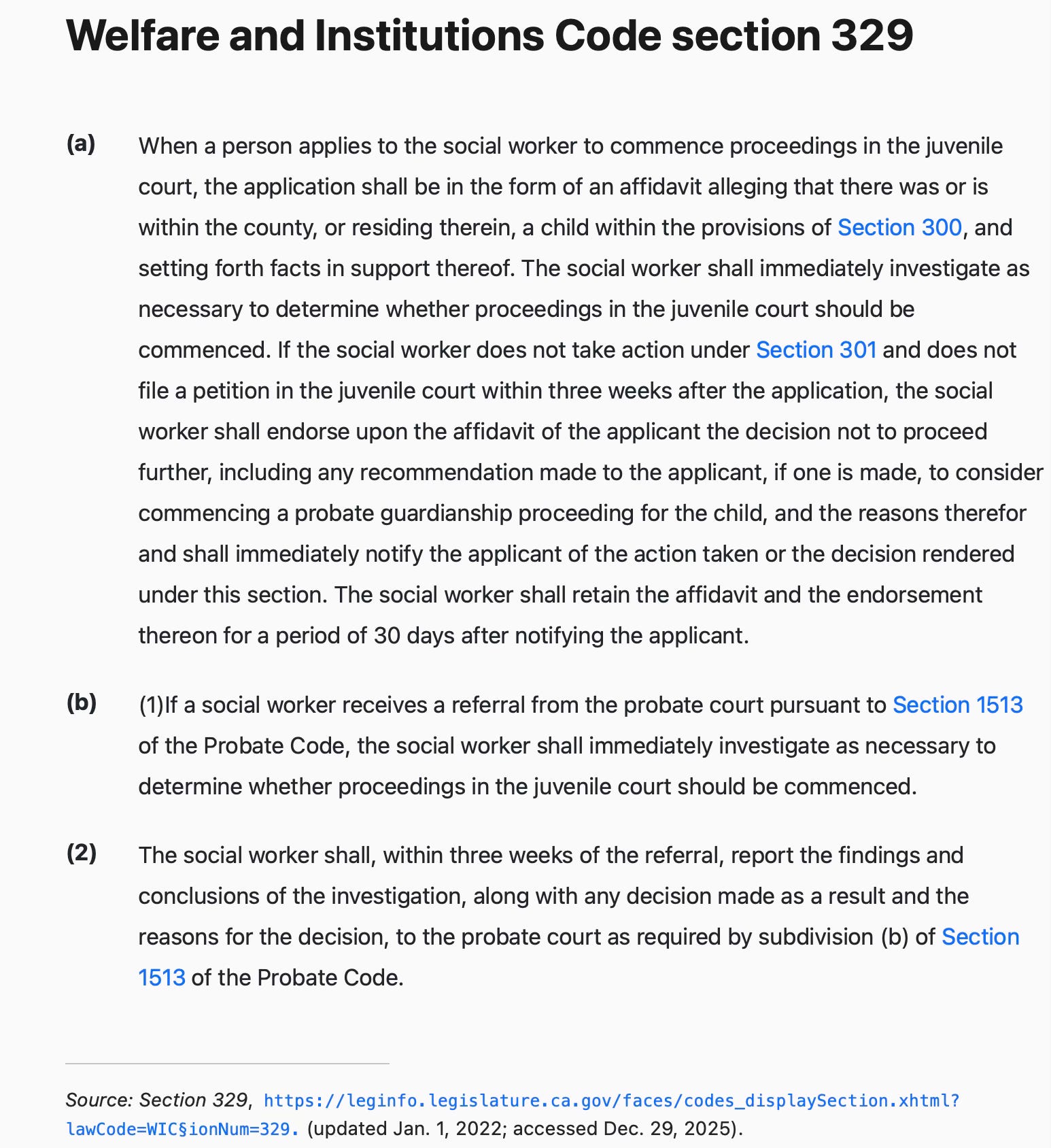
AB 1967, authored by Assembly member Rick Zbur, amends section 329 of the Welfare and Institutions Code (“WIC”) to allow any minor residing in any residential facility licensed under Health and Safety Code § 1502 to file an application for dependency proceedings against the parents. Let me put that in simple terms. A child, of any age, can unilaterally choose his own family even when the child is placed in a safe and appropriate facility by the parents or self-placed himself under the process created by AB 665.
The universe of licensed residential facilities includes shelters and crisis centers, group homes, short-term residential therapeutic programs, private alternative boarding schools, private alternative outdoor programs, children’s crisis residential programs, and faith-based residential facilities. A parent who places a child in any of these settings has, under AB 1967, handed that child a legal mechanism to initiate the removal of their own parents’ custody.
AB 1967 creates a streamlined process for a minor or for the child’s attorney to petition for a dependency that removes control of the child from the parent, temporarily or permanently, without provocation. The minor’s counsel can be affiliated with the facility housing the child or a nonprofit that may financially benefit from removal of the child from the family. The application does require the minor to allege abuse or neglect under the Welfare and Institutions Code § 300, but subsection (c) covers serious emotional damage. Social workers and dependency courts have been trained to consider a parent’s refusal to affirm a child’s gender identity to be emotional damage. Even a placement in a drug rehab, mental health facility or a boarding school that has rules that the child does not like, could be sufficient for the application.
No adult has to corroborate the allegation of the child. No mandated reporter has to observe anything. The child’s unverified statement is sufficient to set the machine in motion while the parent is unaware that the application was filed.
The filing triggers a mandatory social worker assessment of the safety of the parents’ home. Assessment does not mean investigation, and therefore a home visit at the pre-petition stage is not required. The parents may not know that the safety of their home is being assessed. The assessment can be completed based entirely on the child’s statements, without a physical visit to the home. The assessment can be based purely on the child’s statements.
The remarkable thing is that even if the facility where the child is actually living is safe and was chosen by the parents, the application triggers government interference, and places the parents unwittingly at risk of losing control of their child. The child too is in danger because once the child is in state custody, the treatment plan that the parents determined was in the best interest of the child is not required to be followed.
Even in cases in which the social worker declines to file a § 300 petition because the social worker does not believe that the parents are unsafe, the minor or the minor’s attorney can override that assessment and demand a mandatory court review. The court must rule within 14 days. If the court orders the petition filed, a detention hearing is scheduled, which must be held no later than the next judicial day after the petition is filed. Remember, during this entire process, at no time do the parents know the child (or the child’s) counsel is seeking to place the child into state control.
The parents’ first realistic opportunity to learn that any of this is happening, if they are lucky, is at the detention hearing. The parents will have no time to find counsel, review the allegations and obtain evidence to provide any meaningful defense. During that initial dependency hearing, the court can vest temporary custody of the child in the county child welfare department. From that moment, the county controls placement, controls visitation, controls the therapeutic program, and controls the reunification timeline.
That timeline for the dependency, under WIC § 361.5, runs up to 18 months for children three and older. During those 18 months, the dependency process does not adjudicate whether the original § 300 allegations were true. It measures parental compliance with court-ordered services that can include parenting classes, counseling, social worker contact, and compliance reviews. A parent who placed a child in a lawful therapeutic program and has done nothing wrong can spend 18 months in that process before any court has found they did anything requiring it. Visitation with the child is for all intents and purposes controlled entirely by the county social worker.
By way of example, in a case involving a gender-dysphoric child whose parents declined to affirm a transition, if visitation is granted, it is typically supervised, time-limited, held at county facilities, and conditioned on behavioral rules, including required usage of the child’s chosen name and pronouns, prohibition on speaking about the parents’ position on sex-rejecting interventions and any discussion of religion. While the child is in custody of the state, under current law, the welfare system must affirm the child’s transgender identity, develop a case plan that includes gender-affirming services, and must assist the child in obtaining sex-rejecting interventions. The child must be provided accommodations in accordance with the child’s gender identity.
Cash for Kids!
Once the county takes control of the child following the detention hearing, the child must be placed in an AFDC-FC-eligible facility. To be AFDC-FC-eligible, a facility must be organized and operated on a nonprofit basis. The current AFDC-FC rate for short-term residential therapeutic programs is $17,616 per month in state and federal money.
A residential facility that is AFDC-FC-eligible and currently housing a child on private-pay funding has a direct financial incentive to facilitate a dependency filing because it converts the placement to county-supervised foster care with a significant monthly guaranteed public funding. If the child was placed by the parents in a non-AFDC-FC-eligible facility, the county must move the child and place the child elsewhere. The parent loses all authority over the child’s treatment. The attorney helping the child may financially benefit from sending the child to the awaiting AFDC-FC facility. The bill does not have any conflict-of-interest safeguards against this scheme.
This financial incentive structure smacks of fraud, waste and abuse with California’s children at the heart of the grift.
Child welfare agencies and nonprofits incessantly complain that they don’t have enough social workers, that there are insufficient numbers of foster care homes, that more and more children need shelter, while asking for increases in spending, while at the same time, the legislature and those very same agencies and nonprofits work to create the very problem they are supposed to resolve. How Southern Poverty Law Center of them.
CONCLUSION AB 665 permits children to self-admit into residential facilities, which sets up their removal from their parents. AB 1967 permits children to extricate themselves from their parents’ residential choices. Together they create a pathway towards the systematic dissolution of the biological family.
POST SCRIPT – WHY THE ASSEMBLY REPUBLICANS VOTED FOR AB 1967
AB 1967 sailed through the Assembly without one Republican voting against it, even dispensing with oral hearings in the Assembly Judiciary Committee, which has three Republicans (Sanchez, Macedo and Dixon) on the committee, because of unanimous support before the hearing date. [1]The two Republicans (Castillo and Tangipa) on the Human Services Committee hearing uttered not a peep before voting for it. All of the voting Republicans in the Assembly thereafter voted in favor of the bill. I think I know why — though this does not excuse the oversight of the Republicans.
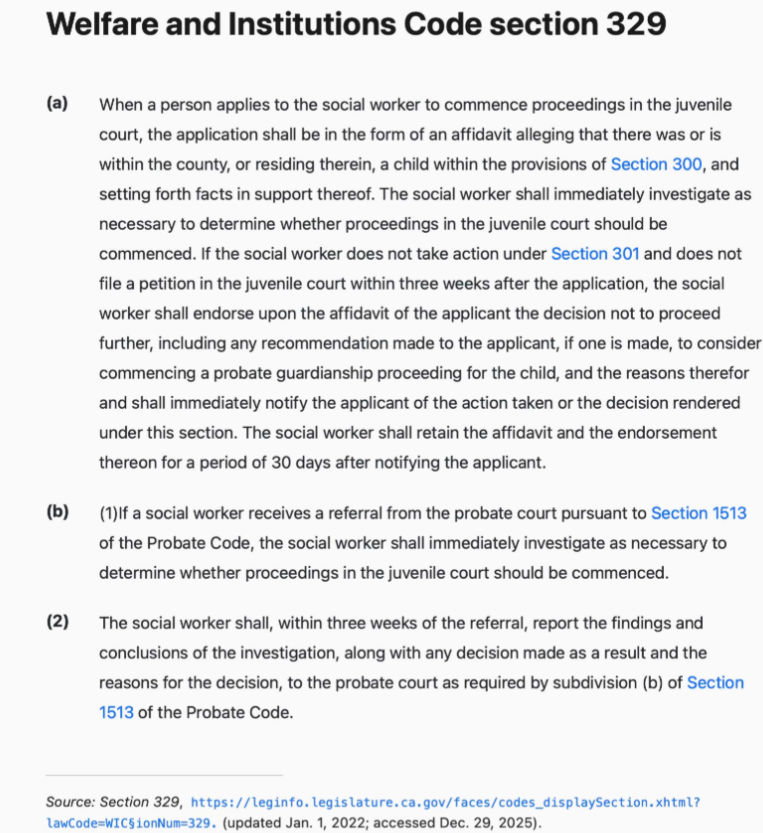
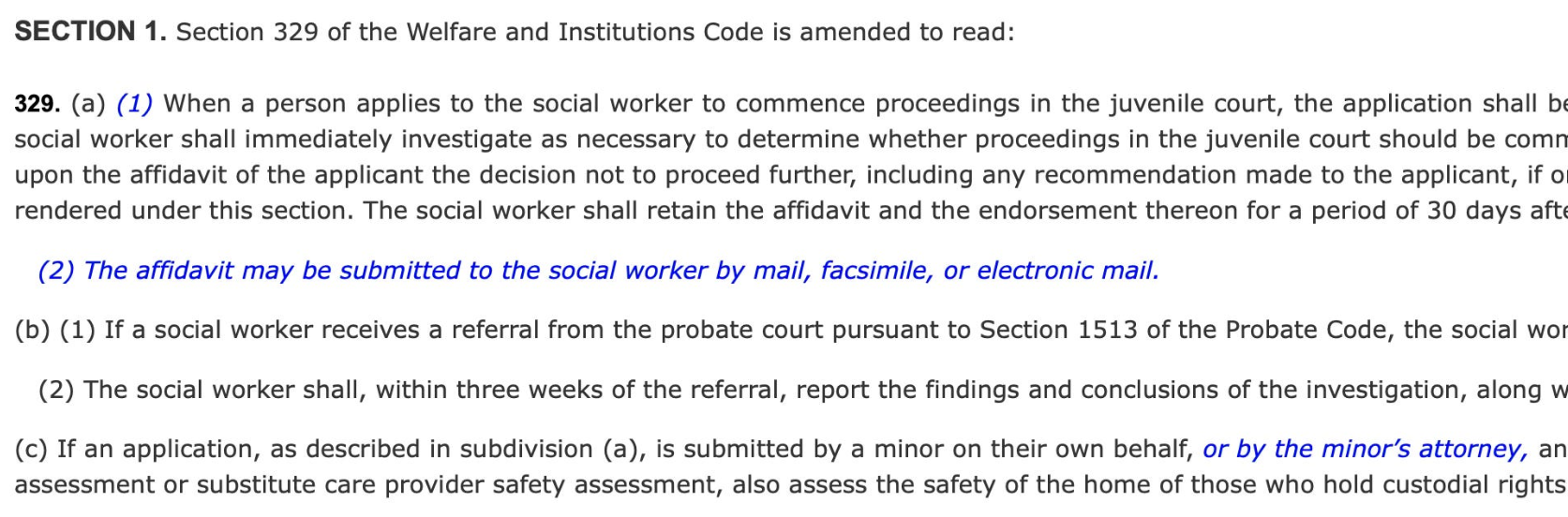
An error, or more likely a blatant maneuver, occurred. The bill, when introduced, failed to highlight the proposed new offending language, making it appear as though it was existing law. (See Photo 1.) With close to 2,000 bills in play, a complacent legislative staffer may have only performed a perfunctory review of the highlighted language and not read the entire bill. A full reading should have led them to compare existing law to the bill language — both highlighted and not — because it simply did not pass the smell test. The hijinks would have then become readily apparent. (See Photo 2.) But the Republicans fell for Zbur’s presentation that the bill was just about helping homeless and abused kids get help through the foster care system.
Pro-tip: any bill authored by Assembly member Rick Zbur and members of the LGBTQ caucus, or any bill that touches on children, merits in-depth scrutiny.
Photo 1. The existing law. Note that there is no subsection (c). |
 |
Then, look at the introduced bill. Subsection c was added but the entire subsection should have been in blue. The lack of highlighting in makes appear that on the terms “by the minor’s attorney” were added. Mistake or purposeful? Knowing Zbur, I vote purposeful. |
 |
[1] The technical term for this is “putting a bill on the consent calendar.” |
|
M4L Academy: In Honor of Parental Rights Month |
|
|
 |
What are Parental Rights? |
|
Parental rights are the foundation of a free society and one of the most important responsibilities entrusted to mothers and fathers. Parents, not government agencies, school systems, or outside activists, have the primary role in raising, educating, guiding, and protecting their children. |
|
| We hear the term Parental Rights tossed around a lot, but do we understand what the term actually means?
Join this conversation with Alex Newman, CEO of Liberty Sentinel Media, as he unpacks the definition and explores why parental rights are so important to a free society like ours. |
|
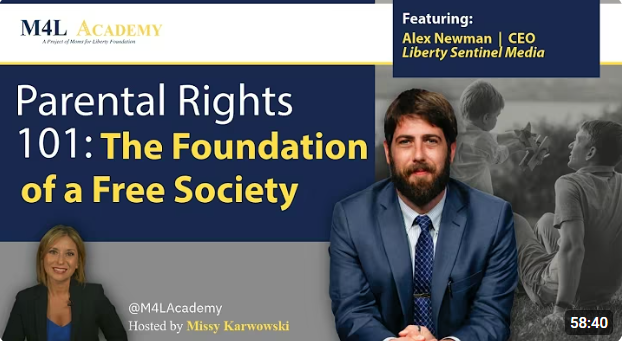 |
Parental Rights at the Foundation of a Free Society |
|
|
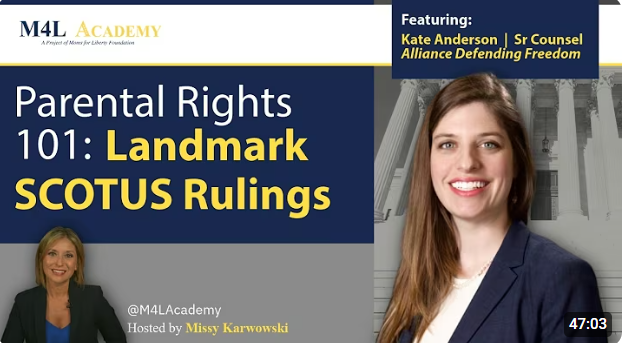 |
Landmark Supreme Court Rulings on Parental Rights |
|
Kate Anderson of Alliance Defending Freedom breaks down the landmark Supreme Court rulings that protect parental rights. From Meyer v. Nebraska to Pierce v. Society of Sisters and the most recent battles shaping what schools can and can’t do, this conversation connects the dots between courtroom and classroom in a way every parent can appreciate. |
|
|
| Prager Reports |
|
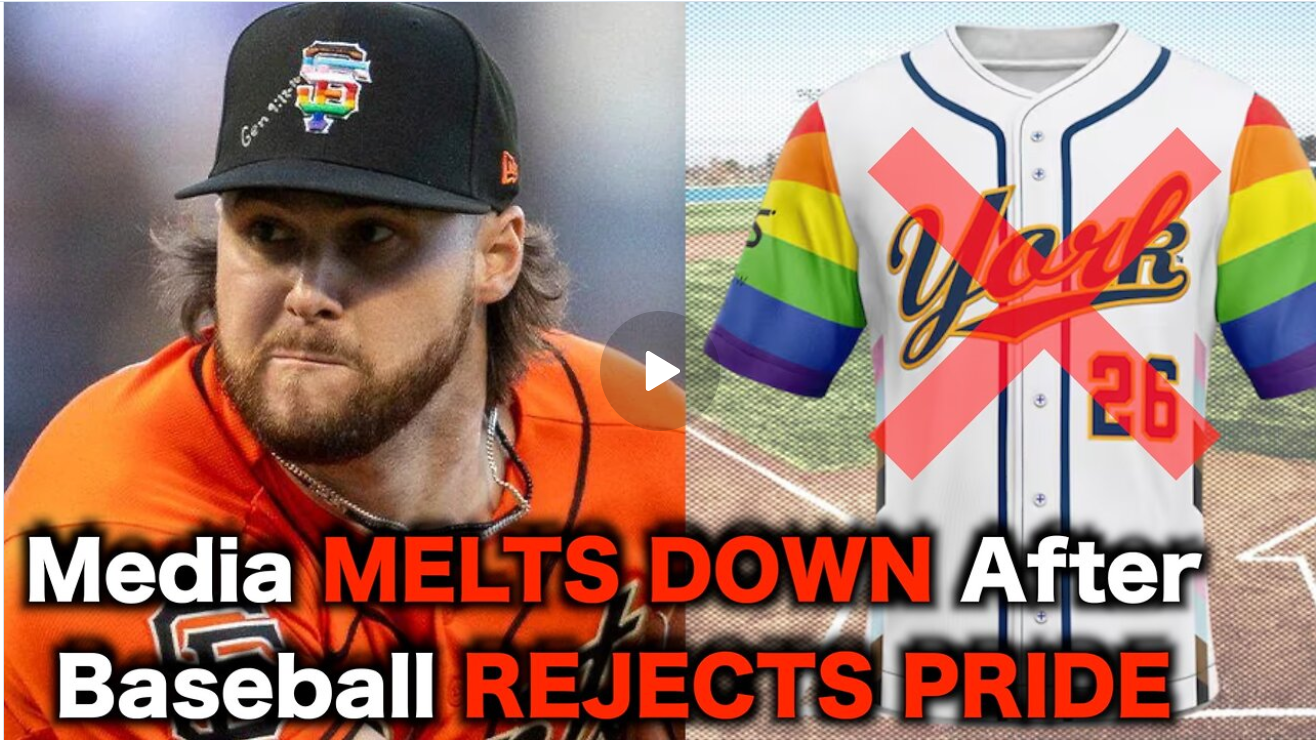
| The Pushback Against Pride |
 |
 |
|
A Legal Resource Is Seeking Help |
|
|
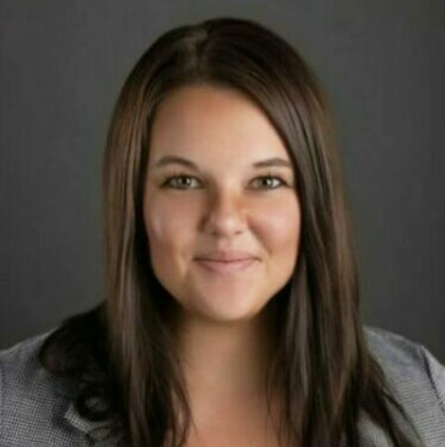
Courtney Corbello, a member of one of the Texas chapters of Moms for Liberty, is an attorney with the Center for American Liberty which litigates cases involving parental rights, free speech and free exercise. Her organization has expressed an interest in challenging the school-based healthcare system that California has implemented over the past few years.
Per the note from Courtney: "From what we know, numerous public schools are hosting school-based health centers or third party providers on their campuses and allowing students to access significant medical care - STD testing, birth control, abortions and psychological treatment, to name a few - all without parents’ consent." |
|
 | Courtney Corbello |
|
|
The biggest challenge in mounting such a case? Finding parents willing to attach their name to the case and stand as litigants. Parents in deep blue Santa Clara county are understandably reluctant to subject their family to possible retaliation directed at them from those on the extreme left.
CAL has decided to reach out to certain California chapters of Moms for Liberty to see if any parents of students in the public school system have encountered these "health services" and would like to fight for their removal.
(Note that Moms for Liberty Santa Clara County is looking into becoming a plaintiff in this lawsuit as a means of representing the interests of our parent members who wish to remain anonymous...).
Anyone interested in learning more about the case is invited to contact Courtney directly, either by phone (703.636.9959) or email (CCorbello@libertycenter.org). |
|
| |
Creeping State Control of Home Education and The Assault on Parental Freedom
An article appearing in an email from EDIJester
dated June 21 2026 |
|
|
The Children Wellbeing and Schools Act forms part of a consistent pattern of expanding state authority over children, families and the transmission of ideas.
The Act contains numerous provisions that give the Secretary of State and local authorities broad delegated powers, particularly around:
The detailed operation of the Children Not in School registers (what information must be provided, update deadlines, data sharing rules). How “suitable education” and “unsuitable home environment” will be assessed in practice. The exact processes for consent to home educate in restricted cases. The level of support offered to home educating families. Implementation timelines and transitional arrangements. The Act is a classic “Christmas Tree Bill” containing significant Henry VIII clauses.
These are parliamentary terms for legislation that is loaded with multiple measures and grants ministers wide-ranging powers to fill in the details later through secondary legislation (statutory instruments).
Henry VIII clauses specifically allow the government to amend or repeal parts of primary legislation via these secondary instruments, bypassing full parliamentary scrutiny.
What starts as seemingly reasonable registration can be made more burdensome through future statutory instruments, with limited opportunity for parliamentary pushback.
The dangers of this mission creep are as yet unknown, so where it will go we cannot tell.
Posited, as are all things at the moment “For the sake of the children”, one must remain vigilant against that visceral emotional blackmail and consider the 2nd and maybe even 3rd order effects of such state over reach.
Over reach which it grants itself powers to amend legislation at will without full Parliamentary oversight.
The Overarching Environs
Consider the following: The proposed under-16 social media ban, which seeks to restrict access and parental authority while handing control to government-approved gatekeepers. The Online Safety Act and regulator powers that expand oversight of online content in the name of child protection, with risks of overreach into legitimate debate. Conversion therapy proposals that risk criminalising parents who affirm biological reality or resist immediate transgender affirmation. Vague and expansive definitions of “Islamophobia” or “anti-Muslimness” that could be applied on a whim to silence criticism. Non-crime hate incidents used to monitor speech, including parental objections to school policies. RSHE and PSHE frameworks that embed contested ideologies, combined with limited parental opt-out rights and Ofsted enforcement. Increasing data sharing and surveillance through registers and multi-agency working that reduce family privacy.
All of these will be factors in home educating, and you could be forgiven for being sceptical, but home educators may think they are exempt from the surrounding policy environment or the cultural or political milieu, but they are not.
In many ways the new register and monitoring powers bring them directly into the state’s orbit and the grasp of its machinations ,like never before.
Here is how the key examples above connect to home educators activities:
RSHE / PSHE Frameworks and Ideological Content
Local authorities assess “suitable education.”
That idea is somewhat chilling, how will they define suitable?
During visits or evidence requests, officers may probe coverage of relationships, gender, Trans, and equity topics and in practice this can include whether your provision aligns with the spirit of national RSHE guidance as it stands, or in the future, whatever ideological enforcement the state decides you should do.
Families that deliberately avoid or present alternative views on these subjects risk being deemed unsuitable unless they steelman their approach, and that is not an easy task, and also a monumentally time consuming.
Non-crime Hate Incidents and Speech Monitoring.
If your teaching materials, discussions with children, or reported statements are flagged (by a neighbour, ex-partner or even a tutor), they can be recorded as NCHIs. This creates a record that could influence future safeguarding or suitability judgments by the local authority. Couple that with Prevent and the culture of snitching the state is developing and people will fall foul of this system.
Conversion Therapy/Gender Affirmation Pressures Parents who do not affirm a child’s self-identified gender or who take a cautious will face challenges under safeguarding or suitability assessments, especially if the child expresses distress or if third parties raise concerns. The Act’s intervention powers make escalation easier for the state.
Vague “Islamophobia” or Extremism Definitions Teaching traditional religious views, criticism of certain cultural practices, or materials that challenge multiculturalism narratives could be scrutinised as potentially “extremist” or divisive during home visits or education reviews.
You can almost sense the Prevent referral being contemplated by a bad actor.
Data Sharing and Surveillance
The new Children Not in School register does not operate in isolation. It feeds into multi-agency systems, allowing information about your family, education provision, tutors, networks and home environment to be shared more easily with children’s social services, police, health agencies and other bodies.
What is presented as better join-up for safeguarding creates a comprehensive surveillance infrastructure that brings home educating families firmly into the gaze of the wider state apparatus, which is currently infused with EDI/DEI and other equity driven mandates.
Online Safety Act and Content Restrictions
If you use online resources, tutors or platforms for education, these fall under greater regulatory scrutiny. Your own online activity as a parent could also be monitored and used in assessments.
If full monitoring is implemented in the future, your own activities could be weaponised against you and your family.
What Does Compliance Entail. Here is what parents must do once the relevant sections of the Act commence.
Obtain local authority consent in specific cases before de-registering from school. This applies to children subject to child protection investigations, those with recent child protection plans (within five years), or those attending special schools. Home education may be refused if not considered in the child’s best interests. Satisfy suitability assessments. Local authorities can intervene if they deem the education or home environment unsuitable.Parents may need to provide evidence of suitable education, which could include written plans, examples of work, or discussions during visits. Register the child on the local authority Children Not in School register. Provide required information about the child and update it promptly, including changes such as new tutors or providers (often within 15 days). Failure to register can lead to fines or school attendance orders. Consider requests for home visits. Within 15 days of registration, the local authority must consider the child’s living situation and may request a visit inside the home to assess the environment and education.Refusing the visit must be treated as a relevant factor when deciding whether to issue a preliminary notice toward a school attendance order.
Why This Feels Particularly Worrying It turns home education from a private parental responsibility into a state-monitored arrangement, requiring regular updates on personal networks, tutors, and even informal arrangements. It raises risks around data security, potential targeting of certain tutors or approaches (for example those resisting specific PSHE content), and administrative burden on families already managing health or other challenges. Combined with home visit powers and suitability assessments, it creates a pipeline where local authorities could scrutinise values, content, or methods used by parents and external providers, pushing indirect enforcement of government-preferred messages. Families using specialist tutors for subjects like religious education, classical approaches, or gender critical perspectives may face extra layers of oversight or pressure to justify choices. One particularly concerning aspect of the new regime is the duty to report details of other people and organisations involved in the child’s education.
Parents must supply names, roles, and contact details of tutors, providers, co-ops, online services, or anyone else making a significant contribution to teaching.
Changes must be notified within short deadlines, often around 15 days.
This requirement does not extend to every indirect influence.
This creates grey areas open to interpretation. Local authorities exercising discretion during suitability assessments or visits may push for broader disclosure.
What one officer views as a “significant contribution” another might treat more leniently.
The administrative burden of monitoring and reporting changes, combined with the risk that certain tutors or approaches (especially those resisting prevailing PSHE or RSHE messages) could attract extra scrutiny, adds real pressure.
Families relying on specialist external input for subjects such as classical education, religious formation, or evidence-based resistance to gender ideology, queer theory, critical race theory or equity now face greater visibility and potential justification demands.
This tilts the balance further toward state oversight of educational networks and content. It risks chilling the use of diverse providers and reinforcing conformity to government-preferred approaches under the guise of suitability checks.
Many authorities already align with national guidance that embeds contested social and ideological content within PSHE frameworks. A family declining certain topics on safeguarding, philosophical or religious grounds could find their provision labelled unsuitable during assessments.
Believe me when I say that this risk is not theoretical.
Future Threats The social media ban for under sixteens by default mandates Digital ID. We are then on the road to client side scanning and the full panopticon .
What starts as a register for wellbeing risks becoming a mechanism to monitor and enforce state-approved messages through curricula and PSHE, while eroding parental autonomy in education. Home educators who opt out to avoid ideological capture now face greater scrutiny.
Recognizing the pattern I describe is essential. Defending home education is part of a wider defense of parental rights and intellectual freedom against official narratives.
You are I am afraid in it, whether you choose to be or not.
Home education often serves as a deliberate alternative to school environments where parents perceive ideological capture by the state, and the state knows this.
The new regime treats home educators with presumptive oversight, demanding data and access while leaving “suitability” open to interpretation by officials immersed in prevailing policy orthodoxies.
Refusal of visits can itself trigger escalation. Over time, this shifts power from parents to the state in determining what constitutes acceptable transmission of cultural and moral values.
Critics rightly note that most home educated children are not at elevated risk and often benefit from personalised, high quality learning.
Parents who home educate do so to prioritise their child’s best interests as they judge them, free from one size fits all school curricula.
The Act’s registration and intervention powers, while framed around wellbeing and other therapeutics driven propaganda, erode that autonomy and heighten the danger of enforcing the government message through the back door of PSHE style expectations.
Vigilance, clear documentation of provision, and defense of parental rights are now more essential than ever. The freedom to educate according to evidence, conscience and family values must be protected against incremental state expansion.
That is work, and I for one am up for the challenge, we cannot allow this level of state interference into our, or our children’s, private life.
Game on, as they say.
Join me.
|
 |
|
|
|
Why are Teachers Unions Pushing Child Harm and Extremism? | In recent years, major teachers’ unions in the UK and US have extended their far left tentacles well beyond traditional concerns like wages, working conditions, and school funding.
They are actively using their influence through leadership overlaps, conference motions, training programmes, and classroom resources to advance specific ideological and political agendas in schools, compromising political neutrality and parental rights.
The NEU, Britain’s largest teachers’ union with hundreds of thousands of members, has gone further into partisan territory. At its 2025 annual conference in Harrogate, delegates passed a motion labelling Reform UK a “racist and far-right party” due to its immigration policies and campaigns.
The motion committed the union to using its political fund to campaign against Reform UK candidates and other “racist organisations,” while producing anti-racist teaching materials and promoting a “whole school approach” to challenging the far right.
Subsequent conferences, including in 2026, reaffirmed opposition to “divisive politics promoted by Reform UK” and called for the trade union movement to “throw its full weight” behind stopping a Reform government.
Resources like “Educators against the far-right” and anti-racist frameworks were developed for classroom use, all the while being fully aware that this breaks the law.
They don’t care, is the simple answer, but then they never have, same old same old from the creaking Marxist union machine.
Nigel Farage and others, including Suella Braverman, accused the union of encouraging indoctrination and violating rules on political impartiality in schools.
Union supporters defend the actions as essential anti-racism and safeguarding work. Well of course they would, even though “anti-racist work” is code for hard left, identity driven power and oppression obsessed totalitarian ideology.
Gosh, color me surprised.
Bring on the Gender Bandwagon and Indoctrinating Children
Again the National Education Union (NEU) has prioritised resources, guidance and conference activity on gender identity, LGBTQ+ affirmation and related equality issues.
The union maintains an LGBT+ charter and produces materials for schools on LGBT+ inclusion, including support for trans and non-binary pupils and staff. NEU conference motions have addressed trans and non-binary rights, with commitments to challenge restrictions and promote self-identification.
The union has also produced guidance encouraging schools to support gender identity affirmation and has been active in opposing elements of the Cass Review approach in some statements and resources.
Just why are the leftists so intent on damaging children?
Broader Patterns and Implications These examples illustrate a pattern: unions leveraging official structures, conferences, political funds, professional development, and partnerships, to embed contested viewpoints on geopolitics, race, immigration, and gender into educational environments.
Proponents see this as advancing equity, inclusion, and student wellbeing (dear god help me!). It isn’t of course, because this would put the turgid beliefs of the left on a par with the Western Canon and all it has brought us.
Plainly it breaches neutrality requirements (for example, UK guidance on impartiality in schools), undermines trust, and prioritises activism over core academics, especially amid documented rises in related classroom incidents and parental complaints about the whole nonsense of EDI/DEI and intersectionality nonsense.
Teachers’ unions have long been powerful political players, with significant spending and lobbying influence. While advocacy for members is standard, the obsession with shaping curriculum content and school culture on divisive issues has intensified debates over who controls education: unions, governments, parents, or teachers themselves.
As public scrutiny grows, questions remain about accountability, transparency, and whether schools should serve as battlegrounds for adult political priorities. Further examination of union documents, conference records, and on-the-ground impacts will be key to understanding the full scope.
The Unions must be neutered, the sooner the better, for they are purveyors of child harm.
Join me.
|
 |
 |
|
|
|
How Christian Teachers Can Opt-Out of California's
LGBTQ PRISM Training |
|
|
LGBTQ+ cultural competency training is required for all teachers and other certificated employees serving pupils in grades seven through twelve. More specifically, beginning with the 2025–26 school year, and continuing through the 2029–30 school year, a local educational agency (LEA) serving pupils in any of grades seven through twelve must provide and require at least one hour of LGBTQ+ cultural competency training annually. |
|
 |
Christian teachers in California are reminded that they are NOT required to set their moral beliefs aside in order to be there for their students. Read on... |
|
| | “[N]o purpose of action against religion can be imputed to any legislation, State or national, because this is a religious people . . .”
United States Supreme Court Church of the Holy Trinity v. United States 1892 |
|
|
California teachers and administrators for whom the PRISM LGBTQ training runs counter to their religious and moral values are asked to contact The National Center for Law and Policy, who can provide guidance with filing an appropriate religious exemption. |
|
| 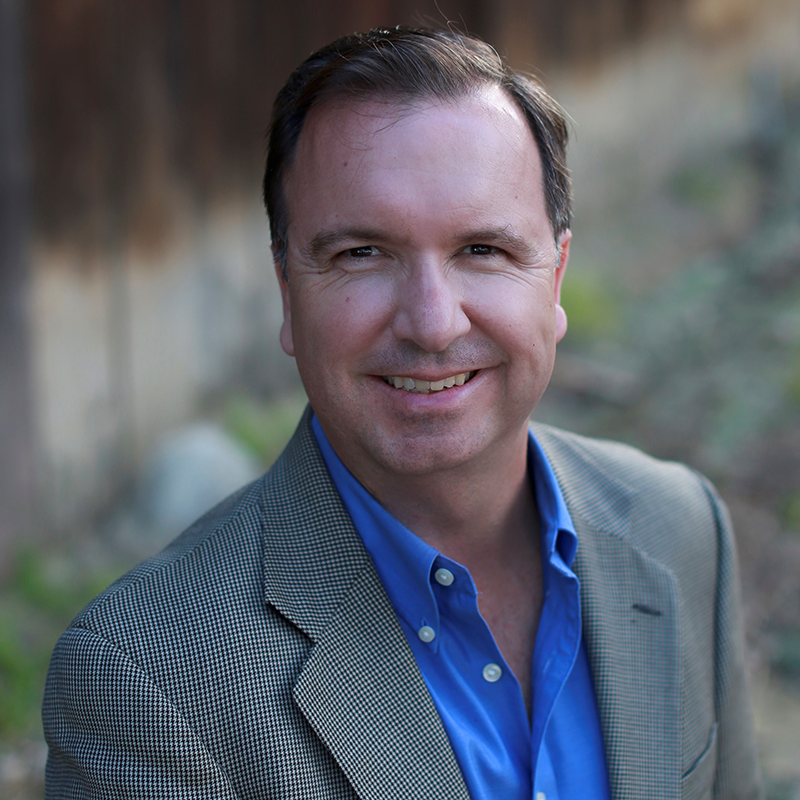 |
Dean Broyles |
|
Dean Broyles is the President of the National Center for Law and Policy (formerly Western Center for Law & Policy). He earned a Juris Doctor degree from Regent University School of Law, in Virginia Beach, Virginia and a Bachelor of Arts degree in sociology from Westmont College in Santa Barbara, California. After college, while serving as a church youth director, Dean was called to law school specifically to be trained to fight for religious liberties. He was mentored in law school in constitutional litigation by Jay Sekulow of the American Center for Law and Justice (ACLJ), one of our nation’s preeminent constitutional attorneys. Dean also clerked for several years at the National Legal Foundation, a religious liberty non-profit organization.
|
|
|
Following law school graduation, while starting his civil litigation practice, he was invited to become an affiliate attorney of the Alliance Defense Fund (ADF), from which Dean has received extensive training in pro-family, pro-life and pro-religious liberty matters at ADF’s outstanding National Litigation Academies (NLA). Because of Dean’s pro-bono work, he was invited to receive special training at ADF’s advanced NLA. Dean is proud to be an ADF affiliate attorney and member of ADF’s honor guard. |
|
|
Prior to founding the NCLP, Dean maintained a successful law practice for more than a decade, where he focused on civil litigation and business matters. Dean cares deeply about his profession, is hard working, and is willing to fight to preserve our precious civil liberties. Dean lives with his wife Shona and three adopted children Ryan, Jasmine and Bryant in Escondido, California. He is a Christian who serves his local church as a volunteer leader. In his free time, Dean enjoys skiing, mountain biking, and working out at the gym.
Dean can be reached either via email (dbroyles@nclplaw.org) or phone (760) 747-4529.
Thank you, Dean, for supporting California's teachers. Soli Deo Gloria! |
|
"California teachers who have sincerely held religious objections to the mandatory PRISM training should contact attorney Dean Broyles at The National Center for Law and Policy for assistance in drafting a legally effective written request for reasonable religious accommodation."
- Dean Broyles |
|
| |
The Best Place for True Learning |
|
|
Education without 'schooling': Why a godly home is the best place for children to learn and thrive |
|
|
An article by Diane Schrader posted to Blaze media on June 25 2026. |
| Considering home education for your family? Here's why that's a good idea -- and how to pull it off. ’
If God has blessed you with children — and the ability to stay home with them — I urge you to consider keeping them home with you as they launch into more formal education.
If you can’t stay home with your kids — well, let’s start there. | 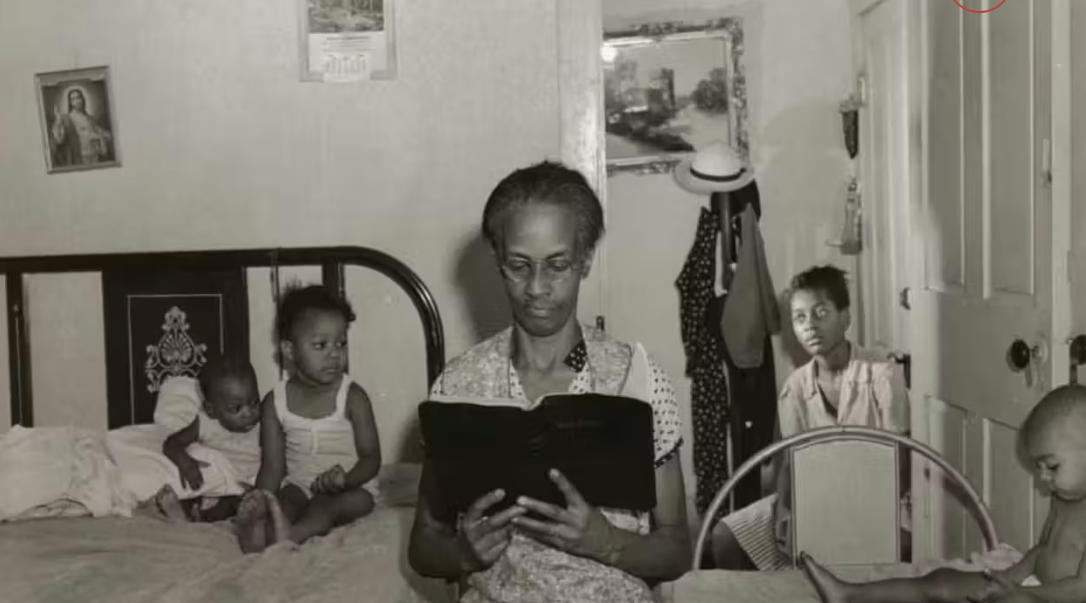 | Washington, D.C. Mrs. Ella Watson, a government chairwoman, reading the Bible to her household. Artist Gordon Park. |
|
|
The most common reason given for not being able to stay home is financial. I would challenge you and your spouse, however, to prayerfully and creatively consider ways to make it happen.
I’ve seen many sacrifices made so that a family can live on one income and encourage that to be seriously considered before children come along. That being said, it’s also never too late and always beneficial to change your lifestyle so that you can spend more time at home with your kids, at any age, period. They grow up awfully fast. |
|
| All children are best served by spending the bulk of their time with the people who love them the most. Period. |
|
|
And by the way, I think an excellent goal for fathers is to pursue income opportunities that allow him to be home-based too (at least some of the time, at minimum). Your children thrive best with abundant time with both of you... |
| Read the full article (payment required) |
| Sunnyvale Claims Supreme Court Rulings Don't Apply |
|
| Parents Sue California School After Refusing $equest to
Opt Kids Out of LGBT Lessons |
|
|
An article by Samantha Kamman posted to The Christian Post on June 25 2026 |
California parents are suing a school district, alleging officials refused to let them opt their young children out of LGBT-related classroom instruction despite a recent U.S. Supreme Court ruling affirming religious parents' rights.
Justin and Rose Taylor filed a federal lawsuit Monday against the Sunnyvale School District, arguing that the district continues to require elementary school students to participate in LGBT-themed lessons without providing parents notice or an opportunity to opt out.
The curriculum "is clearly designed to present certain values and beliefs as things to be celebrated and certain contrary values and beliefs as things to be rejected,” said the Taylors, who are members of The Church of Jesus Christ of Latter-day Saints, also known as Mormonism, and have four children, including a son in third grade and a daughter in first grade at Cumberland Elementary School.
“Our children are the most cherished part of our lives,” the parents said in a statement provided to The Christian Post. “We know and love them best and should be the ones deciding when and how they learn about sensitive topics regarding sexuality and gender.” |
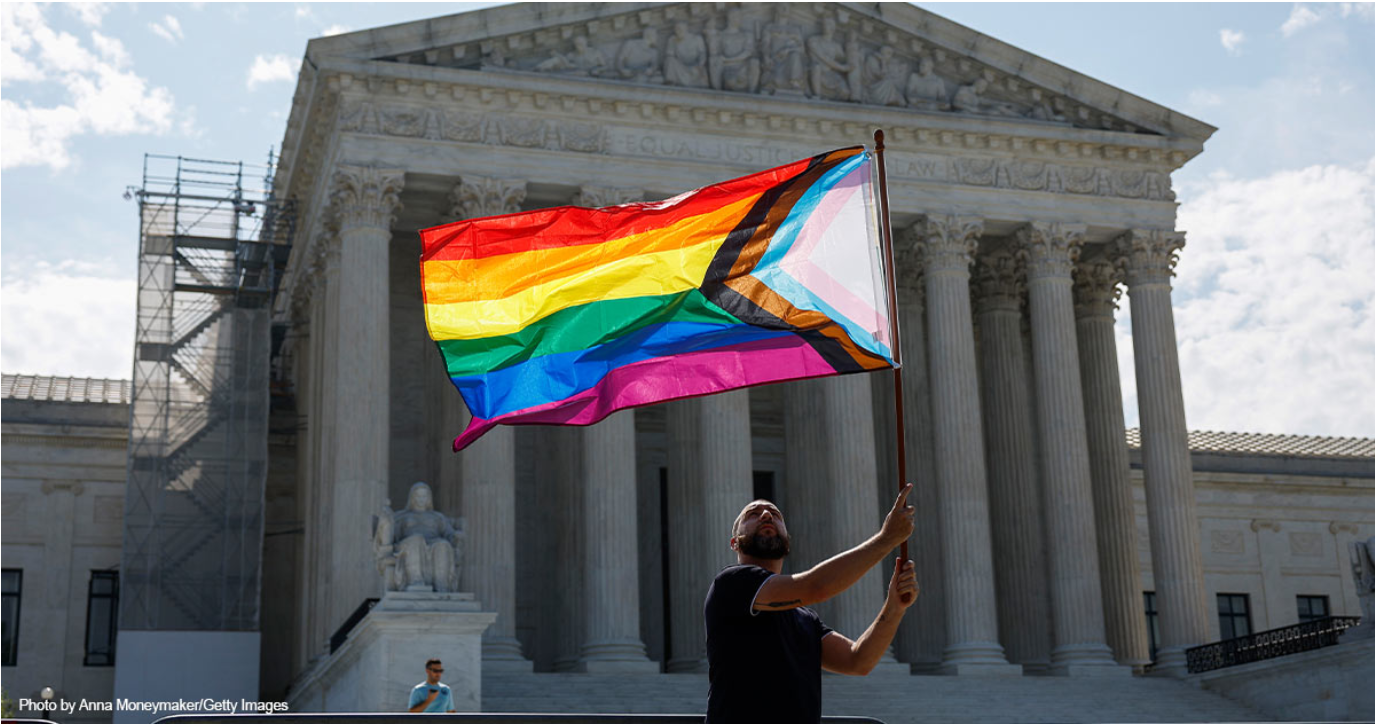
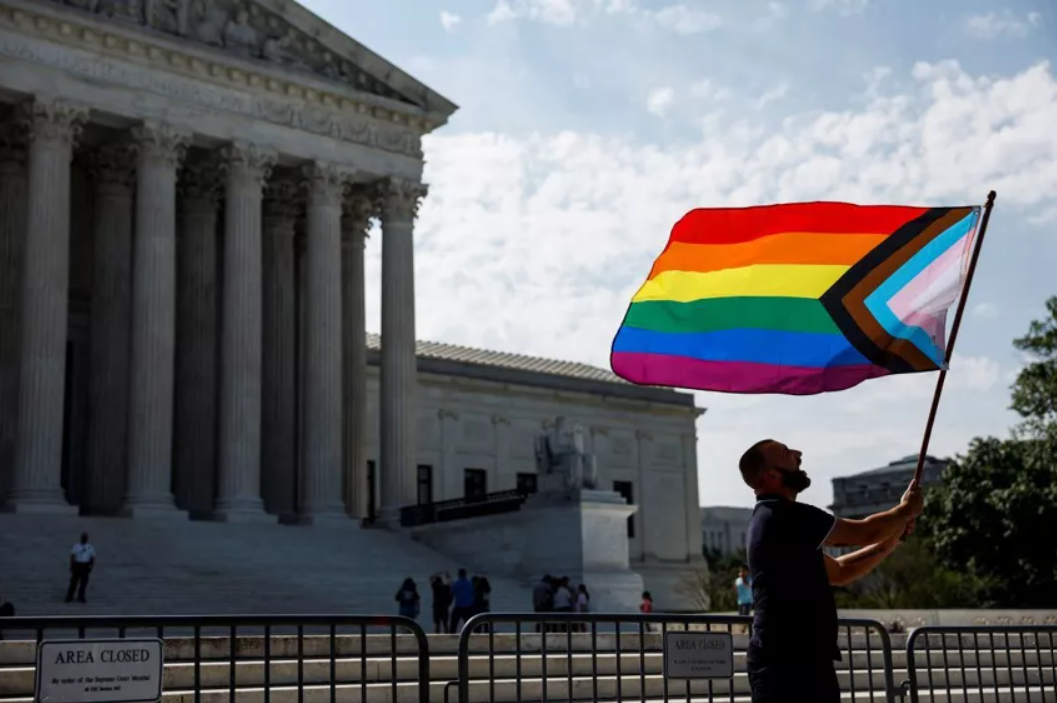 | Anna Moneymaker/Getty Images |
“Fortunately, the Supreme Court has recognized that right for religious parents nationwide,” they continued. “We hope that Sunnyvale can choose to acknowledge and respect our role as parents to direct the moral upbringing of our children.” |
|
|
The lawsuit is backed by Becket and the Hugh and Hazel Darling Foundation Religious Liberty Clinic.
The Sunnyvale School District did not respond to The Christian Post's request for comment.
According to the complaint, the Taylors asked the district in September 2025 to notify them and allow their children to opt out whenever LGBT-themed books or similar instructional materials would be used in class. |
|
[A]fter months of cordial conversation, Sunnyvale abruptly reversed course and denied the Taylors’ request for notice and opt-outs, stating in a letter that [LGBT] instruction ‘is not optional and is not subject to parent opt-out provisions |
|
|
The parents’ email highlighted the Supreme Court’s decision in Mahmoud, Tamer, et al. v. Taylor, Thomas W., et al, ruling that Montgomery County Public Schools in Maryland cannot force children to be exposed to LGBT-themed books in the curriculum.
“Yet after months of cordial conversation, Sunnyvale abruptly reversed course and denied the Taylors’ request for notice and opt-outs, stating in a letter that [LGBT] instruction ‘is not optional and is not subject to parent opt-out provisions,’” the lawsuit stated.
The Sunnyvale School District argued that the Supreme Court’s decision in Mahmoud v. Taylor addressed a specific set of facts in another state,” did not create a “general or automatic right for parents to opt their children out of required curriculum,” and “does not override California’s statutory requirements governing instructional content.”
In their suit, the Taylors ask a federal court to stop the California school district from defying the Supreme Court's ruling.
The parents’ complaint highlights the LGBT-themed books that their children’s elementary school lists as instructional materials, including the picture book Pride Puppy.
The book invites students as young as 3 or 4 years old to locate objects they might find at a pride parade, such as a “[drag] king” and “[drag] queen,” “leather,” “underwear,” and an image of Marsha P. Johnson, an LGBT activist and sex worker.
The Taylors contend the materials are "age-inappropriate and inconsistent with their religious beliefs, practices and child-raising philosophies," arguing that requiring their children to participate undermines their efforts to raise them according to their faith.
Michael O’Brien, counsel at Becket and lead attorney for the Taylors, stated that the Constitution “doesn’t come with a California carveout.”
“Yet Sunnyvale is acting as if it does — attempting to sidestep Mahmoud and override the Taylors’ clearly protected parental rights while paying lip service to the very diversity the Taylors represent,” O’Brien said in a statement provided to CP. “We’re confident the federal courts will reject that approach.” |
|
Supreme Court Rules States May Protect Girls' Sports |
|
|
An article by Joshua Arnold posted to The Washington Stand on June 30 2026 |
|
|
The U.S. Supreme Court on Tuesday ruled 6-3 that state laws protecting girls’ sports from male competitors do not violate Title IX or the Equal Protection Clause of the 14th Amendment. The opinion (West Virginia v. B.J.P.), written by Justice Brett Kavanaugh and joined by all the court’s conservatives, reversed decisions by the Fourth and Ninth Circuit blocking state laws in West Virginia and Idaho, respectively.
“A victory for biology and women’s sports!” Family Research Council President Tony Perkins celebrated the news. “The Supreme Court could not dodge the cultural chaos ball it created with the redefinition of marriage. Like the American people, who are connecting the dots and changing their minds on the reordering of society with the redefining of marriage, maybe the Court will eventually find its way back. This is a good first step.”
State laws reserving women’s sports for biological females in both West Virginia and Idaho were challenged by male student athletes identifying as women. The West Virginia plaintiff, identified in the case simply as “B.P.J.” because he is still a minor, won a girls’ state championship in shot put and finished fourth in discus throw while litigation was under way, the court noted. He began taking transgender hormones before puberty and argued that should allow him to compete in female sports.
In January 2026, two female student athletes publicly accused B.P.J. of harassment. One girl quit the track-and-field team rather than share a locker room with the boy, who she accused of threatening to rape her. She complained that the school promised a full investigation, and then nothing happened. A girl who competed for another school accused B.P.J. of “intimidation tactics” such as staring and stalking after she and her teammates refused to compete against him and were subsequently disqualified.
|
|
|
The Idaho plaintiff, Lindsay Hecox underwent male puberty and began taking transgender hormones in college. In October 2025, Hecox attempted to withdraw his lawsuit — for “mootness,” the ACLU argued — once it was already scheduled for arguments before the Supreme Court. The motion to dismiss the case at that late stage was rejected. |
|
|
West Virginia’s Save Women’s Sports Act prevailed in district court but lost before the Fourth Circuit. Idaho’s Fairness in Women’s Sports Act lost in district court and again before the Ninth Circuit. The Supreme Court reversed both circuit courts.
The court addressed Title IX and Equal Protection in separate sections. Both laws were challenged on Equal Protection grounds, but only West Virginia’s law was challenged on Title IX grounds.
“The question is whether Title IX permits schools to maintain women’s and girls’ sports for biological females. The answer is yes,” the court stated. “The ordinary meaning of the term ‘sex’ at the time of enactment in the early 1970s was biological sex and not gender identity, particularly in the sports context.”
“In addition, the Title IX regulations allowed separate sports teams precisely because of the biological differences between the sexes — namely, the inherent physical differences between biological women and biological men,” the court added. “Allowing a biological male athlete to compete on a girls’ team necessarily displaces or disadvantages a female athlete — replacing her on the roster, knocking her out of the starting lineup, reducing her playing time, depriving her of a medal, and the like.”
“Notably, B. P. J. does not seriously contest that the term ‘sex’ in Title IX … means biological sex,” the court observed. He only argued that “schools must make an exception to that general rule for biological males who identify as female and have taken puberty blockers or hormones.”
The court also rejected the argument that the 2020 Bostock decision, which redefined Title VII employment discrimination on the basis of “sex” to include sexual orientation and gender identity, required them to redefine “sex” in Title IX as well.
“Title VII concerns employment, whereas Title IX as relevant here focuses on sports. The two factual contexts are vastly different. And the two statutes are also ‘vastly different,’” the court contended. “In the workplace, Title VII generally requires that men and women be treated without regard to their sex. In the sports context, by contrast, Title IX authorizes separate men’s and women’s sports teams. … Stated simply, Title VII and Bostock are not relevant in this very different statutory and factual context.”
The court then turned to the Equal Protection argument. “The equal protection questions become: What are the States’ interests in maintaining separate teams for males and females, and in limiting female teams to biological females? And is the States’ sex-based classification — that is, the limitation of women’s and girls’ sports teams to biological females — substantially related to those interests?”
“The States start with the undisputed proposition that biological males generally possess inherent physical advantages in sports — in height, weight, strength, speed, endurance, jumping ability, and the like,” the court recited. “Therefore, the States say, limiting women’s and girls’ sports to biological females (i) helps prevent serious physical injuries to female athletes and (ii) preserves opportunities for female athletes to fairly compete and succeed.”
“Based on all of the above, the States argue — and we agree — that the interests in safety and competitive fairness are important for purposes of equal protection analysis. And the States’ sex-based classification — limiting women’s and girls’ sports to biological females — is substantially related to those interests,” the court concluded.
As with the Title IX challenge, the trans-identifying athletes did not challenge this ironclad analysis so much as ask for a special exemption. “They contend that safety and competitive fairness, while sufficient reasons to exclude most biological males, do not justify excluding a relatively small subclass of biological males — namely, those biological males who identify as female and have taken puberty blockers or hormones.”
The court rejected this argument as well. “Not every biological male athlete is bigger, stronger, faster, or otherwise more athletically able than every biological female athlete,” the court stated. “Some percentage of biological males who identify as male possess physical and athletic capabilities that fall within (or below) the range of typical female physical and athletic capabilities. But the plaintiffs acknowledge that States may still exclude those biological males from women’s and girls’ sports, given the general physical differences between males and females.”
Furthermore, “the Equal Protection Clause does not prohibit the States from applying that same principle to all biological males, including those who identify as female,” the court said. “In short, States are not required to conduct an individual-by-individual comparison of the physical and athletic capabilities of all biological males in order to satisfy intermediate scrutiny.”
“If a school had a co-ed sports team but prohibited all transgender individuals from participating on the team, that would be a distinct transgender classification,” contrasted the court. But such a case “would presumably not be analyzed and justified as a classification based on biological sex,” as the laws of West Virginia and Idaho were. “That said, even if the laws made a transgender or gender-identity classification, this Court ‘has not previously held’ that intermediate or other heightened scrutiny applies to a transgender or gender-identity classification.”
The case generated four additional opinions. Justice Thomas wrote separately to make the point that “transgender status is not a suspect class requiring heightened equal-protection scrutiny,” and the point that “men and boys with gender dysphoria are not women or girls, even if they believe that they are. Sex is an immutable ‘biological’ characteristic. … To use language to obscure reality — to show ‘indifference regarding the truth’ — is to lie to the public and cease to treat our fellow citizens ‘as equal[s].’”
Justice Gorsuch wrote separately to emphasize that “Title IX was enacted as an exercise of Congress’ powers under the Spending Clause,” and thus “does not allow Congress to regulate conduct,” only spending. If there are any regulatory strings attached, “Congress must ‘clearly and unambiguously’ specify” them, so that funding recipients can “‘voluntarily and knowingly’ assent.” Gorsuch also reaffirmed his own idiosyncratic view of his Bostock opinion, which he argues “supports, not undermines, the Court’s conclusion” in B.P.J.
Justice Sotomayor wrote for the three liberal justices in what was essentially a dissent (although technically, the opinion was “concurring in the judgment in part and dissenting in part”). As Sotomayor summarized her position, “I agree that B.P.J.’s Title IX claim fails, although on a narrower basis than that on which the majority relies. As for B.P.J.’s equal protection claim, however, the majority, at this stage of the litigation, gets the answer wrong.”
Justices Kagan and Jackson joined Sotomayor’s opinion, but Justice Jackson wrote separately to claim that the court “should not have” held “that Title IX protects against discrimination solely on the basis of ‘biological sex.’ … Instead, the Court should have assumed as much while leaving open the possibility that Title IX’s definition of ‘sex’ is more capacious.”
To these critiques, the majority responded, “The Court’s holding today is straightforward. The Equal Protection Clause allows schools to maintain separate teams for female and male athletes. Schools may determine eligibility for women’s and girls’ teams based on biological sex. That policy is constitutionally justified by the vitally important interests in safety and competitive fairness so as to provide equal opportunities for women and girls to participate in sports.”
Significantly, the Supreme Court made explicit what everyone already knew about the differences between males and females, but which many feared to say aloud, lest they be called “hateful.”
“As all agree, females and males have inherent physical differences relevant to athletic performance,” the court explained. “The differences include, among other things, height, weight, strength, speed, endurance, and jumping ability. … For those reasons, 27 States — as well as the International Olympic Committee, the United States Olympic and Paralympic Committee, and the NCAA — have banned all biological males from competing in women’s and girls’ sports.”
A law passed 50 years ago and a constitutional amendment from the 19th century do not force states into a different position. |
| How Can Anyone Defend Transgender Sports After This?! |
|
| | |
Allowing boys to compete in girls sports isn’t just wrong—a new lawsuit reveals that it can make girls vulnerable to sexual assault, even alleged vaginal penetration.
Yes, according to a verified complaint filed in a federal court Tuesday, a young man who claimed to identify as female not only competed against a teenage girl in girls’ wrestling, but also digitally penetrated her vagina, causing lasting pain.
How can anyone defend transgender sports policies after this? | 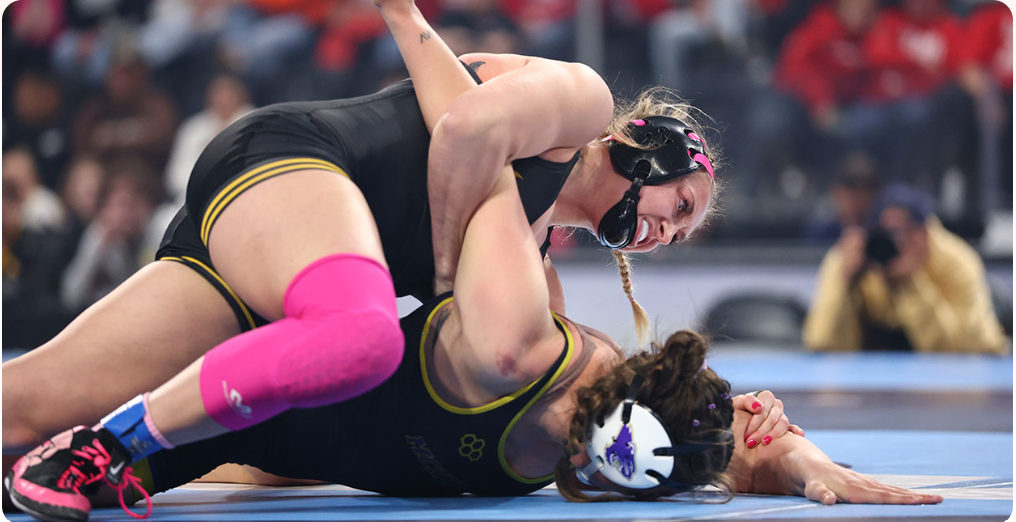 |
Kylie Welker of the Iowa Hawkeyes, top, wrestles Destiny Rodriguez of the McKendree Bearcats on March 7 in Coralville, Iowa. (Justin Tafoya/NCAA Photos/Getty Images) |
|
|
The Alleged Sexual Assault
According to the lawsuit filed in the U.S. District Court for the Western District of Washington, a 16-year-old girl, identified as K.M.K., unknowingly faced off against a male in a wrestling match on Dec. 6. Had she known her opponent was male, she would not have competed.
“During the match, the male athlete sexually assaulted K.M.K., shoving his fingers through her spandex clothing, digitally penetrating her vagina, and holding the position for several seconds,” the lawsuit states. “Visibly distressed, K.M.K. shouted to her mother, who was videorecording the match, that the opponents fingers are ‘in my c—hie!’”
The lawsuit describes the incident in detail, providing a record of exactly what the girl claims happened.
“The opponent reached between K.M.K.’s legs with his left hand, and pushed fingers hard, through her singlet, her Nike Pro spandex shorts, and her underwear,” the lawsuit states. “The opponent’s fingers penetrated her vagina for several seconds, causing great pain.” The lawsuit also claims the male athlete “groped” K.M.K. again before the match ended.
Understandably, the teen girl “felt deeply violated.” She was so in shock that she effectively forfeited the match, allowing the male to win. He took third place in the competition, which enabled him to compete for higher honors, while she lost those opportunities.
“The male athlete was entitled to be honored at any awards ceremonies, the male athlete was entitled to take K.M.K.’s podium spot, and the male athlete was entitled to receive K.M.K.’s medal on a ribbon for his neck,” the complaint states.
The lawsuit states that vaginal penetration “is not a legal wrestling move, and it is not something that could easily happen accidentally. Wrestling singlets are very tight spandex and so the fabric resists pressure, and K.M.K. was wearing three layers of fabric.”
The lawsuit also cites Washington criminal statutes, which define “sexual intercourse” to include “any penetration of the vagina or anus however slight, by an object.” Washington law penalizes rape in the third degree as a class C felony, defined as sexual intercourse without the victim’s consent.
Failure to Act on Sexual Assault ClaimsAccording to the lawsuit, both the victim and her mother reported the alleged assault on Dec. 8, but the school did not follow its own policies requiring a report and investigation into the claims in a timely manner.
The lawsuit claims that 13 girls later expressed discomfort to school administrators because two boys had been using the girls’ bathroom and locker room when they were competing in girls’ wrestling. The alleged sexual assault victim identified her former competitor as one of these boys.
K.M.K. asked the school district to change its policy, allow her to change teams, or at least give her notice if she would be expected to compete against a male. The district allegedly refused.
K.M.K. and her mother, represented by the conservative Christian law firm Alliance Defending Freedom, sued, claiming that the Washington Interscholastic Activities Association, the state superintendent, the school district, and school officials violated their rights. Among other things, the lawsuit claims defendants violated Title IX of the Education Amendments of 1972 and violated K.M.K.’s 14th Amendment rights by placing her in “state-created danger.”
The lawsuit seeks an injunction restoring fairness in girls sports and awarding K.M.K. any victories she lost at the hands of a male competitor. |
| View the Court Filing |
|
|
An Indictment Against Transgender PoliciesAlliance Defending Freedom has won multiple cases at the U.S. Supreme Court, and the jaw-dropping train of abuses documented in this case cries out for justice.
Whether or not K.M.K. prevails in court, this case illustrates the horrific truth about transgender sports policies.
While many men who claim to identify as women may not do so in order to seek an advantage, these men have a biological edge over women in most sports competitions—even before puberty. The vast majority of them also do not likely seek to compete against women merely for the opportunity to prey on these women sexually.
However, when policies remove the guardrails and allow men into women’s private spaces in the name of gender identity, they enable unscrupulous men to take advantage. I do not know the man’s side of this story, but it is beyond the pale for a man to rape a woman in a women’s sports competition.
At the very least, this incident should finally wake Americans up to the danger of these absurd policies. It is high time we protect women, rather than making them vulnerable in the name of political correctness. |
|
|
| |
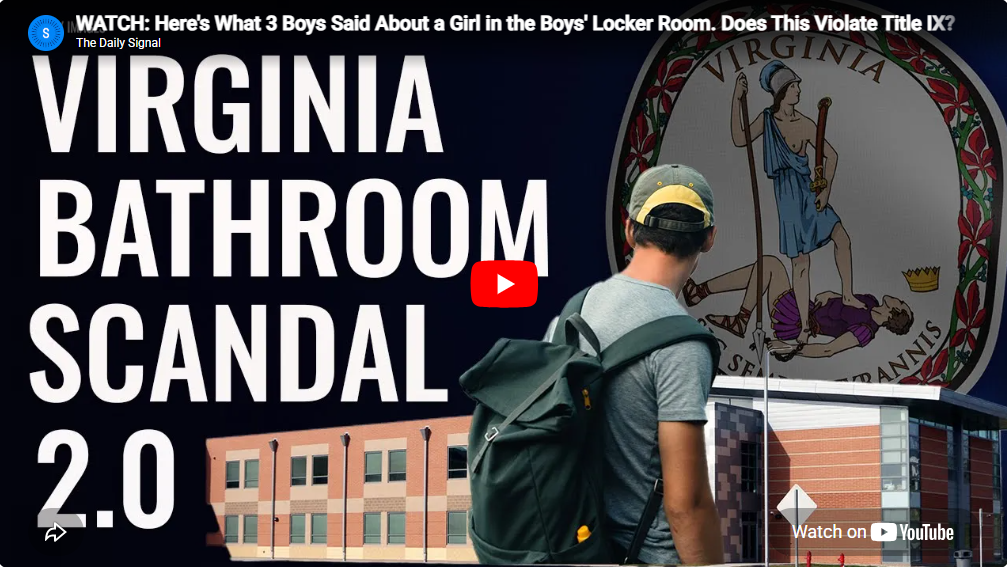
‘WE LIVE IN FEAR’: Students Sue Minnesota University Over ‘Sexual Harassment’ Policy Compelling Obedience to Transgender Ideology |
|
|
An article by Tyler O'Neil posted on The Daily Signal on June 24 2026 |
The University of Minnesota forces students to adopt transgender ideology in the name of preventing “sexual harassment,” and students are suing, saying the policies violate their free speech rights under the First Amendment and prevent them from inviting speakers such as the detransitioner Chloe Cole.
“We live in fear of being disciplined and having our future ruined if we even accidentally use a pronoun someone doesn’t like,” Jackson Barrick, a University of Minnesota student entering his senior year, told the Daily Signal in a statement Tuesday. Young America’s Foundation, a conservative youth organization, represents Barrick and fellow students in the lawsuit, with lawyers from the Southeastern Legal Foundation.
“In the last two years, there have been nearly 20 complaints filed with the university that students violated these policies,” Barrick added. “These policies are there to silence students who believe that sex cannot be changed.”
“This isn’t hypothetical,” the student added. “It has become our reality, and the reality of students all across Minnesota.”
The University of Minnesota declined to comment on pending litigation.
The University’s Policies
The lawsuit, filed June 18, challenges four university policies: two on sexual harassment, one on gender identity and pronouns, and one on discrimination.
|
|
|
It claims the sexual harassment policies apply Title IX of the Education Amendments of 1972 to protect students on the basis of gender identity, thus requiring adherence to preferred pronouns on pain of facing a sexual harassment claim. The pronoun policy explicitly requires members of the university—students, faculty, staff, and even guests—to pronoun policy use a person’s preferred pronouns. The discrimination policy allegedly bars dissent on transgender ideology in the name of preventing discrimination.
|
|
|
 | Detransitioner Chloe Cole in Paris on Jan. 30. (Bastien Ohier/Hans Lucas/AFP/Getty Images) |
|
|
Many of these policies explicitly apply to “guests,” and allegedly would impose punishments on students for viewpoints expressed by speakers the students invite to campus, according to the lawsuit.
Students at the University of Minnesota-Duluth, the University of Minnesota-Morris, the University of Minnesota-Rochester, and the University of Minnesota-Twin Cities are members of Young America’s Foundation and would invite speakers to campus, including Cole, the detransitioner.
Cole, a woman, identified as a male and underwent a mastectomy at age 16 before rejecting her transgender identity. She now speaks publicly against transgender ideology.
The students believe that sex and gender are intertwined, that sex is determined by biology and is immutable, that a man cannot become a woman and vice versa, and that a person’s sex—not gender identity—should determine how he or she uses sex-separated facilities.
The lawsuit claims the university’s policies violate the students’ rights under the First and 14th Amendments by imposing unconstitutionally vague rules, by discriminating against the students’ viewpoints, and by compelling them to endorse messages with which they disagree.
The students ask the court for a declaration that the policies violated the Constitution, an injunction preventing the university from implementing the policies, nominal damages of one dollar, attorney’s fees associated with the litigation, and any other relief the court deems proper.
A Precedent Across the Country
Kimberly Hermann, president of the Southeastern Legal Foundation, argued that a victory for the students would set an important precedent for colleges and universities across the country.
“These so-called anti-harassment policies that equate a belief in common sense—in biological sex—with harassment exist at nearly every college,” Hermann told the Daily Signal in a statement Tuesday. “A win declaring the University of Minnesota’s policies unconstitutional could have huge precedential effects, not only in the courtroom but also serving as a warning to all schools—K-12 and college—that students and parents have had enough.”
“They are no longer afraid to stand up and file lawsuits to stop radical gender ideology from being forced on them daily,” she declared.
While a ruling in the students’ favor may send a powerful message to other schools, it would not be entirely unprecedented.
“School policies that compel pronoun usage violating a person’s belief in biological sex violate the First Amendment,” Hermann stated. She cited the case of Defending Education v. Olentangy Local School District Board of Education, in which a panel of the U.S. Court of Appeals for the 6th Circuit ruled that an Ohio school district’s pronoun rules violated the First Amendment by compelling speech and engaging in viewpoint discrimination.
While advocates for transgender ideology claim that using a person’s preferred pronouns is a baseline courtesy, the lawsuit notes that the challenged policies “require a person to speak contrary to his deeply held beliefs and dictates the viewpoint he may express.”
The lawsuit claims that some students reported a member of the university because that person complained about being required to use the phrase “lactating individuals” rather than “mother.” |
|
|
| OP-ED: Growth Scores: The Latest Education Shell Game |
|
|
| |
| Across America, school districts are celebrating a new education buzzword:
Growth Scores. School board members hear it.
Parents hear it. Taxpayers hear it.
“Our students showed tremendous growth.” “Growth scores are improving.”
“The district exceeded growth targets.” The message is clear:
Things are getting better. But are they?
What many parents don’t realize is that growth scores can create the appearance of academic success even when large numbers of students cannot read, write, or do math at grade level. In some cases, growth scores have become the latest education shell game—allowing school districts to highlight improvement while avoiding the more important question:
Can students actually perform at grade level? That question is measured by academic proficiency.
Growth scores measure something entirely different.
A student who begins the year reading two years below grade level and ends the year reading one year below grade level may show impressive growth. The student improved. The growth score rises. But the student is still behind.
Yet many school districts emphasize growth while saying little about proficiency. Why?
Because growth scores often produce better headlines.
A district where only 35 percent of students are proficient in math may still boast strong growth numbers. A district where most students are not proficient readers may still celebrate “academic gains.” Parents hear the word growth and assume students are succeeding.
Many never discover that proficiency remains alarmingly low.
A Convenient Shift in the Conversation
For years, taxpayers have been told that schools need more money. |
|
|
When test scores stagnated: Schools needed more funding.
When achievement declined: Schools needed more funding.
When learning losses mounted:
Schools needed more funding. Now many districts have found a new way to change the conversation.
If proficiency rates are low: Emphasize growth. |
|
|
If students remain below grade level:
Focus on improvement rather than achievement. If parents ask difficult questions: Present complicated dashboards and statistical models few citizens understand.
Then return to taxpayers and ask for more funding. Parents should recognize what is happening.
This is not simply an education debate. It is a transparency and accountability issue.
Imagine a business that continually lowered performance expectations while asking investors for more money. Imagine a company that celebrated incremental improvement while refusing to disclose whether it met its actual goals.
Shareholders would demand answers. Taxpayers should do the same.
Growth Is Not the Goal To be clear, growth scores are not inherently bad.
Students who make meaningful progress deserve recognition. Teachers helping struggling students catch up deserve credit.
But growth should never become a substitute for proficiency. The purpose of public education is not simply to help students improve from one level of underperformance to another.
The goal is grade-level competency. If a sixth-grade student reads at a fourth-grade level, that student remains behind regardless of how impressive the growth score appears on a district dashboard.
Growth measures movement. Proficiency measures achievement.
They are not the same thing. The danger is that growth scores can mask systemic academic decline.
The public hears about progress while many students continue to struggle with grade-level reading and math. The result is a system where success can be declared almost regardless of outcomes.
Students improve slightly? Success. Students remain below grade level? Success. Budgets increase? Success. More funding requested? Absolutely
The Numbers That Matter Students do not graduate on growth scores.
Employers do not hire based on growth scores. Colleges do not award degrees based on growth scores.
Students ultimately succeed or fail based on what they know and can do. That is why parents should demand transparency.
Ask your school board: What percentage of students are proficient in reading? What percentage are proficient in math? How many students remain below grade level? Are proficiency rates improving or declining? Do not accept vague answers.
Do not accept carefully crafted narratives. Demand the real numbers.
Demand transparency. Demand accountability.
Before voters approve another school bond, levy, or tax increase, they should insist that school districts publicly report proficiency rates alongside growth scores. If schools want more taxpayer money, taxpayers deserve the truth.
Parents fund the system. Taxpayers fund the system.
Students depend on the system. And citizens have every right to know whether public schools are delivering results.
Demand proficiency.
Demand accountability.
Demand results. Because public schools do not need better messaging.
They need better outcomes. |
|
Christian Teachers Must Remain Strong! Guide me in your truth and teach me, for you are God my Savior... Psalm 25:5 |
|
|
Per a post on the California Family Council site dated November 11th 2025:
When Governor Gavin Newsom signed AB 5 into law, few Californians realized just how coercive its requirements would become for faithful Christian teachers. As of this school year, every certificated public school employee working with students in grades 7–12 must complete an hour-long “LGBTQ Cultural Competency” course annually. But make no mistake, this state-mandated training |
|
|
is no mere professional development. It is an ideological loyalty test demanding that educators affirm beliefs about gender and sexuality that directly contradict biblical truth.
Yet there is good news: Christian teachers do not have to surrender their faith to keep their jobs. Under both the First Amendment and federal and state civil rights laws, they have the right to request a religious exemption from trainings that violate their sincerely held beliefs.
That’s why the National Center for Law and Policy, led by constitutional attorney Dean Broyles, is stepping forward to defend teachers of faith who refuse to compromise their convictions. “Teachers’ civil rights do not evaporate when they enter our public schools,” Broyles said. “California’s coercive mandatory PRISM LGBTQ identity cultural competency training directly conflicts with and seeks to actively undermine the deeply held religious beliefs of millions of California families, students, and public-school teachers.”
What the Law Demands — and Why It Is Unconstitutional
Under AB 5, public school teachers in grades 7-12 must complete the PRISM Training, or a closely aligned alternative, which instructs participants to affirm concepts like gender fluidity and to use students’ self-selected pronouns, even when doing so violates their conscience. The program also directs teachers to withhold information from parents about a child’s gender identity if the child has not given permission, falsely claiming that minors have a “right to privacy” from their own parents.
The training explicitly labels traditional Christian beliefs as harmful “heteronormativity,” “homophobic,” and “transphobic,” and equates adherence to biblical truth with discrimination. In essence, teachers are told they must deny their faith or face discipline. |
| View the PRISM training being forced on teachers |
|
|
But the Constitution says otherwise. Under Title VII of the Civil Rights Act of 1964 and the California Fair Employment and Housing Act (FEHA), employers must provide reasonable accommodations for sincerely held religious beliefs unless doing so would cause an undue hardship. Furthermore, the First Amendment protects the free exercise of religion and prohibits the government from compelling speech or belief. |
|
Christian teachers do not have to surrender their faith to keep their jobs. |
|
|
A recent federal court ruling in Mirabelli v. Olson reaffirmed that public school districts cannot compel teachers to lie to parents or affirm gender ideology in violation of their faith. The court condemned such policies as a “trifecta of harm” to teachers, students, and parents. That decision opened the door for teachers statewide to challenge similar unconstitutional policies.
One Teacher’s Example of Courage
One Southern California teacher, represented by Broyles, has formally requested a religious accommodation from his district. In Broyles’s letter to school officials, he explains that the teacher’s faith requires him to speak truthfully, honor parents’ rights, and affirm that God created humanity male and female (Genesis 1:27; Matthew 19:4). Participating in PRISM training would force him to endorse falsehoods about human sexuality and violate his conscience before God.
“The government has no legitimate place marginalizing, shaming, and demonizing the sincere religious beliefs of its good citizens,” Broyles wrote. “State and local LGBTQ+ laws or policies do not supersede well-established federal constitutional rights or a teacher’s right to be free from religious discrimination.”
Broyles also warned that districts cannot retaliate against teachers who request religious accommodation, and that his office will be monitoring any cases of harassment or discrimination. |
|
|
A Call for Courage Many Christian teachers are afraid. They worry that refusing the training might cost them their jobs or reputations. Others are tempted to simply “click through” the training and answer as the state demands, just to keep the peace. But as followers of Christ, we are called to “obey God rather than men” (Acts 5:29) and to stand firm in truth even when pressured to conform. |
|
|
State and local LGBTQ+ laws or policies do not supersede well-established federal constitutional rights or a teacher’s right to be free from religious discrimination. |
|
Scripture is full of examples of courageous believers who refused to bow to the idols of their age. Daniel would not stop praying even when it meant the lion’s den. Shadrach, Meshach, and Abednego would not worship the golden image and faced the fiery furnace. Esther risked her life to speak truth to power. Likewise today, Christian teachers in California are being asked to bow to the idol of gender ideology. Now is the time to stand firm.
|
|
|
Broyles put it succinctly:
“Teachers should be granted the right to opt out of this bigoted, anti-religious indoctrination, which is PRISM training. … What Orwellian, ideologically driven legislators and school administrators clearly need is religious cultural competency training, a.k.a., constitutional sensitivity training. We are ready, willing, and able to deliver it.”
|
|
Christian teachers should not quietly comply with a state mandate that calls evil good and good evil. |
|
| CFC’s Call to Action
California Family Council Vice President Greg Burt is urging both teachers and school board members to take a public stand for truth.
“Christian teachers should not quietly comply with a state mandate that calls evil good and good evil,” said Greg Burt, Vice President of California Family Council. “By standing up for their own rights, teachers are also defending the civil rights of parents and students, protecting every family’s freedom to live and speak according to biblical truth. We need courageous believers in every classroom and on every school board willing to draw a line and say, ‘We will not bow.’ Our children need to see adults who are unashamed to stand for God’s truth about life, family, and gender, no matter the cost.”
Take Action
If you are a Christian teacher being forced to take this training, you have legal options. Contact the National Center for Law and Policy for assistance in drafting a religious accommodation request. You can also reach out to California Family Council for resources and support.
Now is not the time for silent compliance. The next generation of students is watching. When faithful teachers stand firm, they bear witness to the truth that God, not the government, defines human identity, morality, and truth.
Just as Daniel, Esther, and the three Hebrew men stood unashamed before kings and rulers, California’s Christian teachers must now stand before their school boards and declare:
“We will not bow.” |
|
| | |
 |  |
|
PERKINS: 11 Years Later, the Receipts for Same-Sex Marriage Are In |
|
| | |
Per an article by Tony Perkins posted to The Washington Stand dated June 26th 2026 |
Pride Month 2026 began with some bracing news for the LGBTQIA+ movement. According to Gallup’s latest annual survey, public support for same-sex marriage, the morality of homosexual conduct, and transgenderism has declined significantly.
Support for same-sex marriage has fallen six percentage points from its high point in 2022 and 2023. The percentage of Americans who believe same-sex sexual behavior is morally acceptable has dropped to 62%, its lowest level since 2016, the year after the Supreme Court’s decision in Obergefell v. Hodges forced states to recognize same-sex marriages. The most dramatic shift, however, has come on transgenderism. The percentage of Americans who view attempting to change one’s sex as morally acceptable has declined eight percentage points since 2021 and now stands at just 38%.
Why is this happening? After all, major social changes have historically become more accepted over time, not less. Americans are increasingly reconsidering what they were told because they have now lived with the results. The experiment is no longer theoretical. It has become personal.
Take interracial marriage. In 1965, 48% of Americans favored state laws banning interracial marriage. Two years later, the Supreme Court unanimously ruled in Loving v. Virginia that such laws were unconstitutional because they amounted to “invidious racial discrimination.” While controversial in its day, that decision did not redefine the God-given meaning of marriage. Rather, it affirmed the complementarian nature of marriage. As Americans witnessed the results, public acceptance steadily grew. Today, according to Gallup, support for interracial marriage has reached a record high of 94%.
|
|
| |
Clearly, that is not what has happened with same-sex marriage and the broader sexual ideology promoted during Pride Month.
Those of us who fought to preserve the natural and biblical understanding of marriage were often dismissed when we warned that redefining marriage would have consequences reaching far beyond marriage licenses. I remember having a discussion over lunch with the staff of a CNN primetime program, when one of the producers, who was in a same-sex relationship, asked me, “How does my relationship affect your marriage?”
“It doesn’t affect my marriage,” I replied. “But it will affect our culture. It will affect what my children are taught in school. It will normalize something that God’s word teaches is contrary to His design.”
That was always the point. The debate was never about its impact on my marriage. It was about the impact it would have in our schools, our laws, our institutions, and ultimately in the lives of the next generation.
Time could have proved those concerns unfounded. The promise of “marriage equality” was that it was simply about allowing committed same-sex couples to formalize their relationships. Americans were assured that nothing else would change.
But that is not what happened.
More than a decade after the Supreme Court’s 5-4 decision in Obergefell, Americans are no longer evaluating promises, they are evaluating results. They are changing their minds not because someone crafted a better political argument, but because they have witnessed consequences many were assured would never come.
They have seen: Pride parades in major cities where public nudity and sexually explicit displays are celebrated in full view of families and children; Major corporations, universities, and professional sports organizations pressuring employees and athletes to affirm an ever-expanding list of sexual identities; Schools and entertainment normalizing gender ideology for children while Gallup reports that the percentage of Americans identifying as LGBTQ has more than doubled since 2012; A growing commercial surrogacy industry that intentionally deprives children of either their mother, their father, or both; Marriage continuing its long decline while birth rates fall to historic lows.
Perhaps nowhere have those consequences become more visible than in the rise of transgender ideology.
The “T” in the LGBTQ acronym has been used to justify policies that would have been unimaginable just a decade ago. Young children are told they can decide whether they are boys or girls because sex is merely “assigned at birth.” Teenagers are given puberty blockers that interrupt normal development. Radical surgeries with lifelong consequences are carried out on minors and young adults. Schools across the country facilitate gender transitions while keeping parents in the dark.
These are not isolated incidents. Americans have also watched biological males enter girls’ locker rooms, compete in girls’ sports, and gain access to spaces long reserved for women. Millions of Americans are now connecting the dots. They are seeing the fruit of abandoning God’s design for marriage, family, and the two sexes. Once marriage is detached from the complementary union of man and woman, it becomes increasingly difficult to explain why mothers and fathers matter, why men and women are different, or why children have a right to both.
As we mark the 11th anniversary of Obergefell, Americans are no longer arguing over predictions; they are judging outcomes. They have watched the promises of marriage redefinition play out in their schools, businesses, athletic competitions, churches, and families.
Increasingly, the American people are rendering their own verdict. The great experiment of redefining marriage and reinventing the family has produced its results. Americans are no longer judging promises — they are judging outcomes. The debate over the Sexual Revolution is no longer about its promises. It is about its consequences. |
|
|
|
Gender Secrecy: California AB 1955
|
|
| |
|
Federal appeals court reverses course after Supreme Court’s Mirabelli ruling, holding that AB 1955 forbids the very parental notification policies the Constitution requires
A federal appeals court has handed parents a major victory. On June 18, the U.S. Court of Appeals for the Ninth Circuit blocked enforcement of key provisions of AB 1955, California’s law barring school districts from requiring parents to be told when their child adopts a different gender identity at school. The court ruled that the Constitution protects a parent’s right to know, and that California’s law forbids what the Constitution demands.
The case is City of Huntington Beach v. Newsom. A three-judge panel granted a preliminary injunction protecting seven parent-plaintiffs from enforcement of Sections 5 and 6 of AB 1955. The same panel had twice denied this relief before. What changed was the United States Supreme Court.
In Mirabelli v. Bonta, the Supreme Court held that California’s school gender secrecy policies likely violate parents’ rights under the Free Exercise Clause and the Due Process Clause. The Ninth Circuit applied that ruling here. As the panel put it, “In light of Mirabelli, AB 1955 thus forbids the mandatory policies that the Constitution requires.”
The court grounded its decision on a principle older than the disputed policies themselves. Quoting the Supreme Court, the panel wrote that “parents—not the State—have primary authority with respect to the upbringing and education of children.” That authority, the court explained, includes “the right not to be shut out of participation in decisions regarding their children’s mental health.” When a child shows signs of gender distress at school, parents have a constitutional right to be told.
The panel also rejected California’s central argument. The State claimed the parents lacked standing because they could not prove their own children would identify as transgender, ask the school for secrecy, and have that request honored. The court was not persuaded. Parents who object to the secrecy policies, the panel held, “very likely have standing because they are objects of the challenged exclusion policies,” with no need for “any individualized showing as to whether a particular parent’s child was likely to exhibit gender dysphoria.”
On the harm to families, the court was direct. “The deprivation of constitutional rights constitutes irreparable harm.” And on where the public interest lies, the panel adopted the Supreme Court’s words: an injunction here “promotes child safety by guaranteeing fit parents a role in some of the most consequential decisions in their children’s lives.” |
Years in the Making
This ruling did not come from nowhere. The California Family Council has fought for parental notification for years, against fierce opposition. Working with a coalition of parental rights groups, CFC helped draft a model policy to notify parents when their child is recognized at school under a different gender, with a new name and new pronouns. Ten school districts passed versions of that policy. Sacramento responded with AB 1955, a law designed to shut down those policies.
Chino Valley Unified School District, led by board president Sonja Shaw, was the first school board to introduce a policy against the secret gender transition of students. She was ecstatic about this week’s ruling.
“Parents have a constitutional and God-given right to the upbringing of their children. When CVUSD passed a parental notification policy, the state came after us hard. … We didn’t back down,” said Shaw, who is currently running for California State Superintendent of Public Instruction against an opponent who testified for the state in the Mirabelli case. “[This] ruling is a major win for parents everywhere who believe schools should not operate behind closed doors. This is about accountability, transparency, and restoring parental authority.”
The legal fight ran a long road. Parents and teachers challenged the secrecy regime in federal court in Escondido in Mirabelli v. Olson, and won. The Ninth Circuit stayed that win. Then the Supreme Court stepped in, vacated the stay, and held that California’s policies likely violate the Constitution. That decision in Mirabelli is now the foundation under this latest ruling against AB 1955.
Thomas More Society represents the parents and teachers in Mirabelli, the civil rights class action that reached the Supreme Court. The firm welcomed the Ninth Circuit’s decision.
“Yesterday, the Ninth Circuit enjoined AB 1955, California’s ban on school districts passing policies to advise parents about their child’s gender presentation at school, holding that, ‘In light of Mirabelli, AB 1955… forbids the mandatory policies that the Constitution requires,'” said Paul M. Jonna, Special Counsel for Thomas More Society and Partner at LiMandri & Jonna LLP. “This decision is a direct result of the courage of our clients who challenged California’s gender secrecy regime back in 2023.”
“The Supreme Court’s historic decision in Mirabelli makes clear that parents cannot be kept in the dark about their own children’s ‘gender identity’ at school,” Jonna added. “Every state law that interferes with parental rights in this way violates Mirabelli—and we are very pleased that the Ninth Circuit got this right by declaring AB 1955 unconstitutional.”
The City of Huntington Beach and the plaintiff parents were represented by America First Legal with co-counsel Schaerr Jaffe. Nick Barry, Senior Counsel at AFL, called the ruling a vindication.
“The Ninth Circuit’s decision is a powerful vindication of parental rights,” Barry said. “California cannot use state law to force schoolteachers and administrators into a conspiracy of silence against parents. California’s law, and similar school policies, use state coercion to intentionally interfere with the parent-child relationship and separate a child from their parent. That is wrong and unlawful. The Constitution is clear — parents have the right to know what is happening with their children and make decisions regarding their mental health, and no state law can override that fundamental protection.”
|  | What This Means for California Families
Greg Burt, Vice President of the California Family Council, said the ruling confirms what CFC has argued all along.
“For years, Sacramento told parents they had no right to know when their own child was living as a different sex at school. We said that was wrong and that it violated the Constitution. The Ninth Circuit now agrees,” Burt said. “AB 1955 was built to keep moms and dads in the dark. This ruling pulls back the curtain. No parent should have to learn from a stranger what the school already knew about their child.”
“This fight is not over,” Burt added. “The State has fought parents at every turn, and the injunction so far protects only the families who sued. But the direction is clear. Parents have a constitutional right to raise their own children, and that right does not stop at the schoolhouse door.”
The fight is indeed far from finished. The injunction is preliminary, and it shields only the seven plaintiff parents while their appeal proceeds. Attorney General Rob Bonta is still appealing the underlying Mirabelli judgment in the Ninth Circuit, and his office has repeatedly said it expects to prevail, calling an earlier stay a measure that “protects vulnerable students and avoids confusion for teachers and schools while we appeal.” Bonta has long maintained that parental notification policies violate students’ privacy and civil rights. After years of being told they had no voice, California parents have now heard a federal court say otherwise, but the State has given no sign it intends to back down. |
|
|
|
The union boss continues to spew drivel, regards teachers as victims, and at the same time takes advantage of them.
|
Per an article by Larry Sand posted to For Kids & Country dated June 22nd 2026 |
|
|
Randi Weingarten, president of the American Federation of Teachers, wrote a hyperbolic piece titled “America’s Teachers Can’t Afford to Teach,” which appeared in Time magazine on June 11.
The excessively whiny article is filled with half-truths meant to make readers feel sorry for impoverished, underpaid teachers. Among other things, she asserts that the vast majority of American educators are living paycheck to paycheck, taking on debt to buy groceries, and facing other financial hardships.
She maintains that the pay gap between “teachers and other college-educated professionals—known as the ‘teacher pay penalty’—has grown to 27%. To put it plainly, people with the same level of education and experience can make far more doing almost anything other than teaching. We cannot accept this as an unfortunate reality or an accident.”
But when you look at the facts, which apparently is an alien concept to the union boss, you get a very different picture. While it is true that teacher salaries nationwide have not quite kept up with inflation, Weingarten tells only part of the story, omitting many perks afforded to educators.
Just Facts, a nonprofit dedicated to researching and publishing verifiable facts on critical public policy issues of our time, analyzes teacher salaries and reports that in the 2021–22 school year, the average U.S. teacher earned $66,397 in salary and $34,090 in benefits, including health insurance, paid leave, and pensions, for total compensation of $100,487.
Also, full-time public school teachers work an average of 1,490 hours per year, including time spent on lesson preparation, test construction, grading, providing extra help to students, coaching, and other activities, while their counterparts in private industry work an average of 2,045 hours per year, about 37% more than public school teachers.
Weingarten also fallaciously claims that teachers in states with union-backed collective bargaining agreements (CBAs) earn 24% more than those in states without such agreements.
However, those without an agenda tell a very different story, arguing that CBAs actually hurt the bottom line for all teachers. Mike Petrilli of the Fordham Institute writes that teachers in non-collective bargaining districts earn about 12% more than their unionized peers. Other research by Michael Lovenheim and Andrew Coulson produced similar findings. In 2018, University of California, San Diego professor Augustina Pagalayan reported that CBAs do not improve teacher pay.
It’s worth noting that union dues for teachers are quite high these days. In Los Angeles, for example, full-time educators pay about $1,500 in dues annually.
Weingarten also never explains where the bulk of union dues are spent. According to a Pew Research poll, about 58% of public K-12 teachers lean Democratic and 35% lean Republican. But OpenSecrets reports that in 2024, the American Federation of Teachers gave $3,069,063 (99.89%) to Democrats and a scant $3,323 (0.11%) to Republicans.
Additionally, while she bemoans low teacher pay, the money she collects from them goes to pay her a hefty salary. As the Illinois Policy Institute reveals, Weingarten’s current yearly income is $514,488, making her a one-percenter.
Another fraud perpetrated by Weingarten concerns a book she wrote last year, Why Fascists Fear Teachers: Public Education and the Future of Democracy, which she claims will “empower us and give us hope.” The problem is that every word from the union boss is nonfactual claptrap.
As Aaron Withe, Freedom Foundation CEO, writes, the book opens by comparing the Nazi occupation of Norway to the current state of American education and “argues that anyone who disagrees with the author’s vision for public schools is, in some meaningful sense, a fascist.”
Perhaps the biggest deception in Weingarten’s book is its portrayal of her role during the pandemic. “I led the AFT in developing a concrete plan to reopen schools as quickly and safely as possible,” she claims.
Bald-faced lie.
In reality, she repeatedly argued for keeping schools shuttered throughout the spring and summer of 2020, while her union aggressively lobbied the CDC to revise its school-reopening guidance. Two of her language recommendations were adopted verbatim.
Weingarten also outrageously used members’ dues to pay for her fiction-laden book.
Researcher Maxford Nelsen combed through the AFT’s most recent LM-2—the annual financial disclosure unions file with the U.S. Department of Labor—and unearthed a detailed accounting of how member dues were used to produce Weingarten’s book.
The AFT paid nearly $1 million to a New York law firm, and its attorney is likewise thanked in the book’s acknowledgments for reviewing the manuscript. When the New York Post asked about it, an AFT spokesperson claimed the review was done pro bono, but the union LM-2 says otherwise. |
|
|
There was also $6,000 for fact-checking, $5,212 for a single-author photograph by a Washington-based photographer, and $64,090 to a literary agency that lists AFT, not Weingarten, as its client.
Nearly 30 AFT staff members are thanked in the acknowledgments, prompting questions about their role in the book’s creation. Meanwhile, travel costs for Weingarten’s nationwide promotional tour are not itemized separately but were almost certainly substantial. |
|
|  |
Photo Credit: AP Photo/Seth Wenig, File |
|
|
|
In other words, teachers paid for nearly everything. Weingarten may not have contributed a single dollar to the enterprise.
Weingarten was also one of the more strident leaders in 2025’s anti-Trump “No Kings” movement. She wrote, “At every turn, this president has undermined the rule of law, weaponized the federal government against the people it should serve, and divide and silence us. And now, the same far-right groups that cheered his chaos are smearing those of us who are organizing peacefully for justice.”
The hypocrisy here is glaring. This is a woman who has served as AFT president since 2008 and, before that, led the UFT, AFT’s New York City branch, for 11 years. Additionally, teachers do not vote for her directly; only delegates do.
At the end of the day, Randi Weingarten is a dishonest, left-wing, hypocritical bloviator who always points the finger at others for various problems.
Other than offending the dishonorable queen, teachers have nothing to lose by saying goodbye to their union and can save a lot of cash in the process. |
|
|
| Support School Board Trustees Who Protect Children and Promote Liberty |
|
|
Continue to support Santa Clara County schoolboard trustees who support parental rights and preserve Christian values. They are:
Oak Grove School District:
Otila Torres San Jose Unified School District: Nicole Gribstad Franklin-McKinley School District:
Marc Cooper Morgan Hill School District: Pam Gardiner Alum Rock Union School District:
Linda Chavez Cupertino Union School District: Long Jiao
|
 | Franklin-McKinley school board trustee Marc Cooper has announced that he will run once again for the board in 2026. Please support his candidacy however you can. |
|
|
Moms for Liberty will always stand on the side of truth and the protection of parental rights to see to the proper nurturing of their children. If you don't understand why we do, you may be a part of the problem.
|
 |
|  |
|
|
|
| California Chapters of Moms for Liberty Endorse Sonja Shaw
for California State Superintendent of Public Instruction |
|
|
Sonja Shaw, a devoted mom and tigress when it comes to defending the welfare of her two young daughters, decided to take on a broken public school system that has strayed from its central mission of providing a solid education to California's children.
Sonja was elected to the Board of Education in November 2022. Born and raised in Chino California, Sonja was educated in Chino Valley schools and graduated from Ayala High School. She lives in Chino with her husband Chris and their two children Jaxx and Kooper, both of whom attend Chino Valley schools.
|
|
 |
Ms. Sonja Shaw |
|
|
Before serving on the school board, Sonja owned and operated two small businesses: one involving training women about fitness and health and the other a professional photography studio. She has also previously held a California Real Estate License. Today, Sonja continues to lead a small community-based Bible study. She was motivated to run for school board to give parents a seat at the education table.
Sonja has served as President of the Board of Education since 2023. She represents her District as City of Chino Liaison and as a representative of the Baldy View Regional Occupational Program Commission. |
|
| Read Sonja's encouraging article below entitled Gavin Newsom cut parents out of trans kids’ lives — until one brave judge said no
The California chapters of Moms for Liberty are proud to support Sonja Shaw in her run for California State Superintendent of Public Instruction. Godspeed Sonja! |
|
| |
|
John Adams: Mindful of the Importance of the South |
|
|
John Adams proved to be a key figure in the founding of America. Adams ended up being instrumental in binding Virginia (and by extension, the entire south) to the revolution.
Adams was responsible for nominating George Washington of Virginia to serve as commander-in-chief of the Continental Army. This key strategic decision, made in June 1775, provided the rebellion with a respected Southern leader, which was crucial for uniting the colonies against Great Britain. Adams recognized that the armed resistance surrounding Boston in 1775 was overwhelmingly a New England affair, which risked alienating the Southern colonies. |
|
 |
John Adams, 2nd President of the United States |
|
|
To transform the regional conflict into a unified continental war, Adams strategically nominated George Washington, a Virginian, to serve as commander-in-chief on June 15, 1775. By placing a Southerner at the head of a primarily Northern army, Adams ensured that Virginia—the largest and most influential colony—was politically and militarily bound to the revolutionary cause.
Adams bypassed popular local candidates like John Hancock, arguing that Washington possessed the necessary "skill and experience" and an "excellent universal character", with an innate ability to command respect across all the colonies. Adams understood that without Virginia's full commitment, the rebellion would likely fail. His successful persuasion of Congress to appoint Washington effectively cemented the union of the colonies, turning a local Massachusetts defense into a national struggle for independence. |
| Read more about John Adams |
|
|
|
Moms for Liberty Santa Clara Works with 917 Society
Getting Constitutions into the hands of every 8th grader |
|
|
September 17, 1787 marks a pivital event that changed the world. It is the day the United States Constitution was signed by the delegates of the Constitutional Convention in Philadelphia, Pennsylvania.
Moms for Liberty Santa Clara is now working with the 917 Society to get copies of our founding documents -- the Constitution and Declaration of Independence -- into the hands of 8th graders throughout the county. We believe it very important that our young people understand what makes this nation exceptional.
Within Santa Clara county we have over a hundred schools instructing 8th graders. The question now before us: how many of these schools are interested in teaching about the Constitution?
Preview the handout provided by clicking the image (at right). |
|
| |
A primary object should be the education of our youth in the science of government. In a republic, what species of knowledge can be equally important? And what duty more pressing than communicating it to those who are to be the future guardians of the liberties of the country?
- George Washington |
|
|
| Midterms are Fast Approaching. Your Vote Is Vitally Important |
 |
|
| |
|
|
America Celebrates Its 250th Birthday
1776-2026 |
|
| | |
 |
| Rooting Out Pornographic Materials In School Libraries |
|
|
Karen England's organization Take Back the Classroom continues to work hard towards seeing to it that age inappropriate materials are removed from school libraries. |
|
|
There’s a clear trend happening right now and it’s moving in the direction of parents and taxpayers.
This week, the Eighth Circuit Court of Appeals delivered a major win, ruling that authors and publishers do not have a guaranteed right to place sexually explicit materials in public school libraries.
The case centered on Iowa’s Senate File 496, which requires schoolbooks to be age-appropriate and prohibits materials with descriptions or depictions of sex acts. A coalition of activist groups and major publishers challenged it but the court sided with schools, families, and tax payers.
|
|
| The ruling made a few things crystal clear:
Schools have a legitimate educational role in deciding what materials are appropriate The First Amendment does not guarantee access to any book at taxpayer expense Removing sexually explicit books from schools is not a “book ban” |
|
|
In short: public schools can remove sexually inappropriate content.
And there is more…
Back in December, the Fifth Circuit weighed in on a similar issue. This time involving public libraries in Texas, Louisiana and Mississippi. That court allowed a law regulating sexually explicit content for minors to move forward.
The Fifth Circuit signaled that even in public libraries, there is no unlimited right to demand access to every piece of content, especially when it comes to protecting children in taxpayer-funded spaces.
Put these together and the trend is undeniable:
Sexually explicit books can be removed from public schools Courts are moving in favor of parents and taxpayers Sexually explicit books can be restricted in public libraries Government institutions can set reasonable, age-appropriate boundaries
For years, parents have been saying this and getting dismissed for it.
Now the courts are catching up.
This aligns with longstanding Supreme Court precedent (Pico), which allows schools to remove materials that are not educationally suitable or are pervasively vulgar. And more recently, the Court affirmed that parents have the right to direct their children’s exposure to sensitive topics.
So, despite the outrage from major publishers who say “the fight continues”the legal momentum is clearly shifting.
Shifting toward protecting kids from sexually explicit content and respecting the taxpayer.
Public schools and libraries are funded by taxpayers They are not required to provide sexually explicit content to minors Parents have a rightful voice in what children are exposed to
Families who’ve been pushing for this for years are finally receiving back up from the courts.
|
| What is in YOUR school library?
|
|
|
|
"Parents are the first and strongest advocates for their children. When we stand up and speak out, we can take back the classroom, reclaim our rights, and protect our kids from state-sponsored grooming."
- Karen England
Founder, Take Back The Classroom
|
|
 |
Karen England, a warrior fighting to keep pornography out of the hands of children. |
|
|
Ongoing Education and Updates:
A regularly updated blog is maintained featuring the latest developments related to sexually explicit materials in schools. In addition, we offer training webinars to educate, empower, and connect individuals engaged in this important work.
At every level focus remains the same, namely to provide clear, practical tools that lead to meaningful results and protect the hearts and minds of our children. |
|
|
|
| | |
| |
|
|
| | |
Children of married parents with high education levels are more likely to be healthy and succeed in school and life than their peers. Children from these families are also more likely to live above the poverty line and benefit from extracurricular activities such as music lessons, sports, and summer camp. These activities offer students prized background knowledge.
Students from families with lower education levels must rely more on schools to provide information. Poor reading and math scores nationwide do not give confidence that schools in low-income areas are bridging the gap. Many schools have reduced time spent on history, science, geography, literature, and civics in favor of generic reading strategies, so-called social-emotional learning, and “gender” studies. Schools often cut the very subjects that help students.
Differences in background knowledge have enormous implications for teaching reading. Two students can read the same paragraph and perform differently on the test, not because one is more intelligent, but because he knows the topic better.
For decades, researcher and former professor E.D. Hirsch argued that literacy is connected to content and vocabulary. Hirsch has argued that “broad general knowledge” is essential for reading comprehension because students need prior knowledge to understand what they read.
Likewise, professor of cognitive psychology Daniel T. Willingham, who researches reading comprehension, has also found that background information is important for students to understand text.
The evidence behind this approach is compelling. A 2024 report in Education Next observed long-term reading gains among students attending schools using knowledge-rich curricula. Researchers at the University of Virginia School of Education and Human Development similarly found that elementary students who learned under the Core Knowledge curriculum—which was developed by Hirsch—improved their reading abilities.
While much of the education establishment doubles down on skills and spends less time on content, some educators are bucking the trend by reemphasizing rigor and factual memorization.
Liberty Common School in Fort Collins, Colorado, has used the Core Knowledge curriculum since 1997. The curriculum gives students a foundation in a range of subjects, including history, geography, literature, science, music, and the arts. School officials report their 2025 graduating class had Colorado’s highest composite SAT score.
The Great Hearts network of schools also uses a classical liberal arts curriculum focusing on great books. The Great Hearts network started in Arizona, but parent demand helped expand the academies to Louisiana and Texas. Instead of narrowing instruction, these schools immerse students in primary sources and maintain high academic expectations.
Students cannot analyze history they do not know, evaluate scientific claims they do not understand, or engage in civic debate without any understanding of civilization. Knowledge is a prerequisite for any critical thinking. Yet state lawmakers in California, New Jersey and Vermont have ethnic studies standards or requirements that emphasize activism, identity politics, and “lived experiences” with no civics requirements.
Encouraging schools to adopt knowledge-rich curricula is a proven approach to closing the achievement gap. It is one of the few education reforms that should attract support across ideological lines.
America does not suffer from a shortage of taxpayer spending. It has a knowledge problem. Schools cannot continue stripping content out of classrooms while expecting literacy rates and civic understanding to improve.
If policymakers genuinely want to close the achievement gap, they should start by recognizing what that gap represents: unequal access to knowledge. |
|
|
| Moms for Liberty turns 5 years old!
Moms for Liberty was established just five short years ago, in January of 2021 in Florida. The group continues to be dedicated to fighting for the survival of America by unifying, educating and empowering parents to defend their parental rights at all levels of government. Happy birthday! |
|
|
|
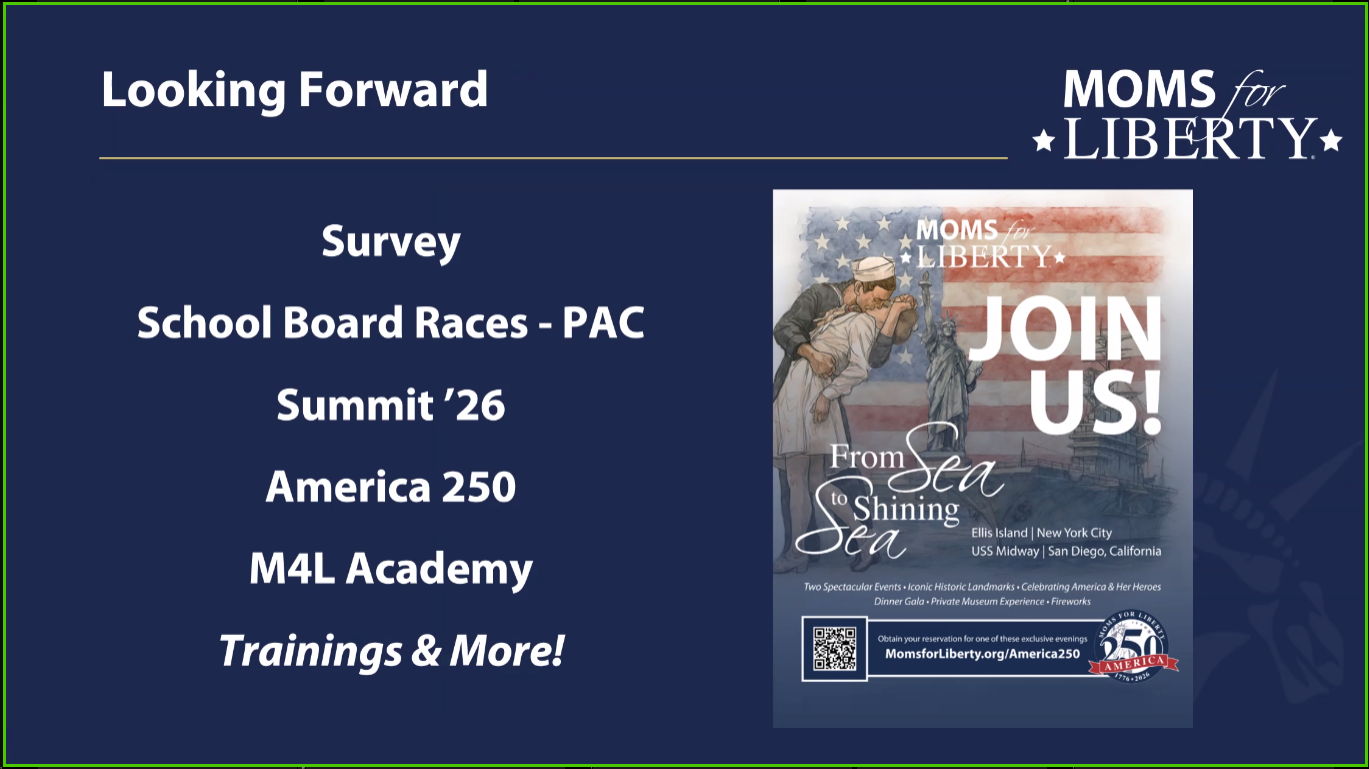 |
|
Become a Part of the Frontlines... |
|
|
* Advocacy for the proper and effective education of America's youth.
* Understanding of precisely how we engage with the public to - Promote liberty - Spread awareness - Engage on key issues
- Hold leaders accountable - Oppose government overreach - Activate for patriots to public service |
|
|
| | |
Want to See the Change? Be the Change... |  |
|
|
If you share our concern over what has been taking place in our classrooms, please consider joining with us as we fight for families, for children, for education, for truth, and for common sense.
We continue to ask people whether they understand what is now taking place within our school systems. We continue to provide information and resources to help people, especially parents, gain some idea of what's being taught to kids (and why). And yes, we continue to ask people to get involved and help with the lifting.
We fight against children being taught to hate their country, to judge people based on the color of their skin, and to ignore the basic truths of biology. We fight against the sexualization in school of little ones and the destruction of the innocence of youth. Perhaps most importantly, we fight to ensure that the proper teaching of math, reading and writing remain at the forefront of a child's education.
The idea that it is parents who are responsible for raising, educating, and seeing to the well being of their kids, that is sacrosanct.
Join with us in preserving the attributes and ideals of this great nation. Associate Membership comes free of dues.
| | Become a Member |
|
 |
Feel free to forward this newsletter to friends and family. Actually anyone who acknowledges the fundamental right of parents to raise, educate, and protect their children are invited to join with us. We are gathering a group of joyful warriors, folks who understands why (and for whom) we fight.
|  |
|
|
Organizations whose efforts we support... |
|
|
| |
| | | | | |
Think on this... |  | |
|
|
Moms for Liberty Santa Clara County operates as a 501(c)(4) nonprofit organization.
The organization's primary mission is to organize, educate and empower parents
to defend their parental rights at all levels of government.
|
|
| |
|
|